



What's Happening?
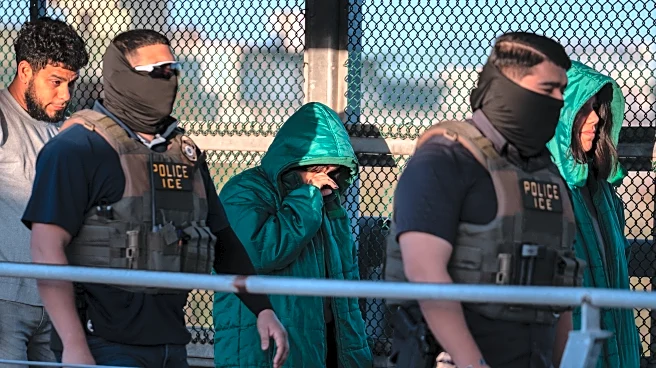
Estefany Rodriguez Florez, a journalist for Nashville Noticias, was arrested by Immigration and Customs Enforcement (ICE) officers in Nashville, Tennessee. Her arrest has sparked significant controversy, with her attorneys claiming it was an unconstitutional
retaliation for her reporting on ICE's enforcement activities. The Department of Justice (DOJ), however, argues that as an undocumented immigrant, Rodriguez Florez does not have First Amendment protections. The DOJ's stance is based on the assertion that the Supreme Court has not explicitly ruled that undocumented immigrants are covered by the First Amendment. Rodriguez Florez, originally from Colombia, entered the U.S. on a tourist visa and is married to a U.S. citizen. She has applied for asylum and a green card, citing threats she faced as a journalist in Colombia.
Why It's Important?
This case highlights the ongoing debate over the rights of undocumented immigrants in the United States, particularly concerning constitutional protections. The outcome could set a precedent for how First Amendment rights are applied to non-citizens, especially those involved in journalism. The case also underscores the tension between press freedom and immigration enforcement, with potential implications for how journalists report on sensitive topics like immigration. Press freedom groups have expressed concern that this arrest could deter journalists from covering controversial issues, fearing retaliation. The situation also reflects broader issues within the U.S. immigration system, which has been criticized for its handling of asylum seekers and the rights of immigrants.
What's Next?
Rodriguez Florez remains in custody while ICE considers an appeal against her release on bond. The legal proceedings will continue to unfold, with potential implications for her asylum and green card applications. Press freedom advocates are likely to continue their support, calling for her release and highlighting the broader implications for journalistic freedom. The case may prompt further legal challenges regarding the constitutional rights of undocumented immigrants, potentially reaching higher courts for a definitive ruling.