




What's Happening?
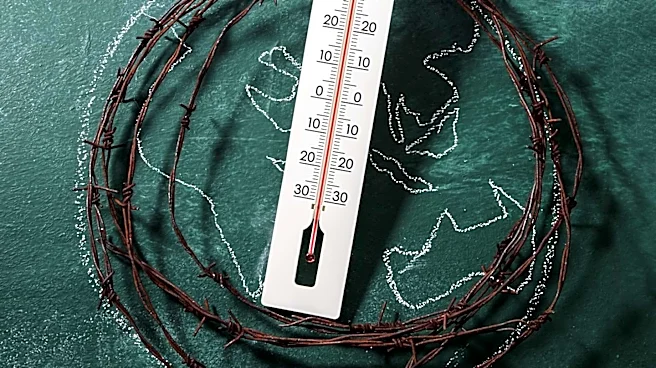
Global warming has significantly accelerated over the past decade, with Earth experiencing its fastest heating rate since modern temperature records began in 1880. A new study from the Potsdam Institute for Climate Impact Research (PIK) provides statistically
significant evidence that the pace of global warming has increased since approximately 2015. Researchers found that the planet has warmed at a rate of about 0.35°C per decade over the last 10 years, nearly double the average rate of just under 0.2°C per decade observed between 1970 and 2015. This acceleration was confirmed with over 98% statistical confidence after accounting for natural climate fluctuations like El Niño and volcanic eruptions. Grant Foster, a US statistics expert and co-author of the study published in Geophysical Research Letters, stated that a strong and statistically significant acceleration of global warming has been demonstrated since around 2015. The analysis of five major global temperature datasets (NASA, NOAA, HadCRUT, Berkeley Earth, ERA5) consistently showed this accelerated warming trend.
Why It's Important?
The accelerated rate of global warming has critical implications for international climate goals, particularly the Paris Agreement's aim to limit the long-term rise in global temperatures to 1.5°C above preindustrial levels. If the current warming rate continues, the planet could exceed this 1.5°C threshold on a long-term basis before 2030, much sooner than previously anticipated. This rapid approach to critical climate thresholds could trigger more severe and frequent extreme weather events, impacting U.S. infrastructure, agriculture, and public health. Industries reliant on stable climate conditions, such as farming and tourism, face increased risks. The findings underscore the urgency for the U.S. and other nations to drastically reduce carbon dioxide emissions from fossil fuels to zero, as the speed of future warming directly correlates with emission reduction efforts. The study highlights that the pace of climate change is not constant but can vary significantly, demanding more dynamic and aggressive policy responses.
What's Next?
The accelerated warming trend necessitates a re-evaluation of current climate mitigation strategies and emission reduction targets globally, including within the U.S. Policymakers may face increased pressure to implement more stringent environmental regulations and invest further in renewable energy sources to curb greenhouse gas emissions. International climate negotiations, such as future COP summits, will likely intensify discussions on achieving net-zero emissions more rapidly. Scientists will continue to monitor global temperature datasets and refine climate models to better predict future warming trajectories and their regional impacts. Public awareness campaigns regarding the urgency of climate action may also increase, potentially influencing consumer behavior and political discourse. The findings could also spur further research into geoengineering solutions, although these remain controversial.
Beyond the Headlines
The statistically confirmed acceleration of global warming raises profound ethical and intergenerational equity questions. The current generation's actions are rapidly diminishing the window for future generations to avoid the most catastrophic impacts of climate change. Legally, the accelerated warming could strengthen arguments for climate litigation against governments and corporations for insufficient action. Culturally, it may foster a greater sense of urgency and potentially shift societal norms towards more sustainable practices, though resistance from entrenched economic interests is also likely. The study also implicitly challenges the perception that climate change is a gradual, distant threat, reframing it as an immediate and rapidly intensifying crisis. This could lead to a more widespread recognition of climate change as a national security issue, given its potential to exacerbate resource scarcity, displacement, and geopolitical instability.