



What's Happening?
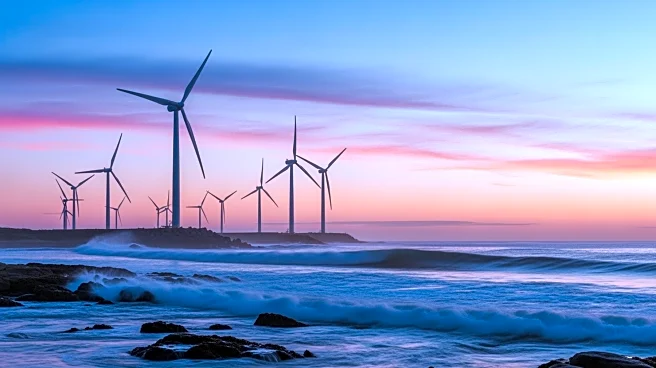
In 2025, Great Britain achieved a record level of electricity generation from renewable sources, according to provisional figures from the National Energy System Operator (Neso). Wind energy emerged as the largest single source of renewable electricity,
while solar power saw a significant increase, rising by nearly a third compared to 2024. This growth was facilitated by the UK's sunniest year on record and the expansion of solar panels across the country. Despite these advancements, electricity from fossil gas also increased slightly, underscoring the challenges in meeting the government's ambitious 'clean power' target by 2030. The target aims to minimize the use of polluting gas in electricity production. The government is under pressure to reduce energy bills by up to £300 by 2030, arguing that clean power can help achieve this goal.
Why It's Important?
The record production of renewable energy in Great Britain is a significant step towards reducing carbon emissions and combating climate change. However, the increase in fossil gas usage highlights the ongoing challenges in transitioning to a fully renewable energy system. The government's 'clean power' target, which aims for 95% of electricity to come from renewables and nuclear energy by 2030, is crucial for reducing reliance on fossil fuels. Achieving this target could lead to lower energy bills and greater energy security, protecting households from volatile fossil fuel markets. However, the need for grid upgrades and the integration of new technologies like batteries and nuclear power are essential to support this transition.
What's Next?
To meet the 'clean power' target, Great Britain will need to continue expanding its renewable energy capacity and upgrading its electricity grid. This includes connecting new renewable sources and improving the grid's ability to handle increased renewable electricity. The government will also need to address the periods when renewable energy production is low, relying on technologies like batteries and nuclear power to provide a stable energy supply. These efforts will require significant investment and policy support to ensure a smooth transition to a cleaner energy system.
Beyond the Headlines
The shift towards renewable energy in Great Britain has broader implications for global climate change efforts. As one of the leading countries in renewable energy adoption, Great Britain's progress can serve as a model for other nations. However, the challenges faced, such as the need for grid upgrades and the integration of new technologies, highlight the complexities involved in transitioning to a sustainable energy system. The success of these efforts will depend on continued government support and investment in clean energy technologies.