








What's Happening?
The inclusion of climate risk scores on online home listings has sparked a political debate. These scores, provided by private companies like First Street, assess potential exposure to climate-related hazards such as flooding and wildfires. While supporters
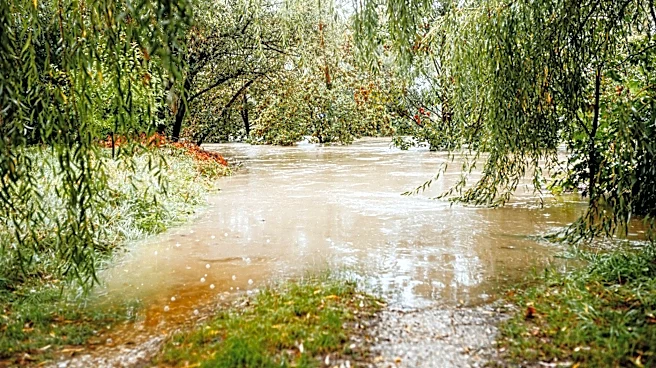
argue that these scores offer a comprehensive view of future risks, critics, particularly from conservative groups, claim they may unfairly influence property values and buyer decisions. The Federal Emergency Management Agency (FEMA) provides historical flood data, but First Street's scores incorporate predictive modeling to estimate future risks. Critics argue that these scores could overstate risks and discourage potential buyers, affecting the real estate market.
Why It's Important?
The debate over climate risk scores highlights a broader discussion about the integration of environmental, social, and governance (ESG) metrics into economic decisions. These scores could significantly impact the real estate market by influencing buyer behavior and property values. If buyers rely heavily on these scores, it could lead to decreased demand for properties deemed high-risk, potentially affecting insurance decisions and resale values. The controversy also reflects tensions between traditional data sources like FEMA and newer predictive models, raising questions about data accuracy and its impact on consumer behavior.
What's Next?
Conservative groups are urging Congress to investigate the development and funding of these private climate scores. They are advocating for a formal process that allows homeowners to challenge or appeal scores they believe are inaccurate. This could lead to legislative or regulatory changes in how climate risk data is used in real estate. The outcome of this debate could influence future policies on climate risk assessment and its role in economic decision-making.