

What's Happening?
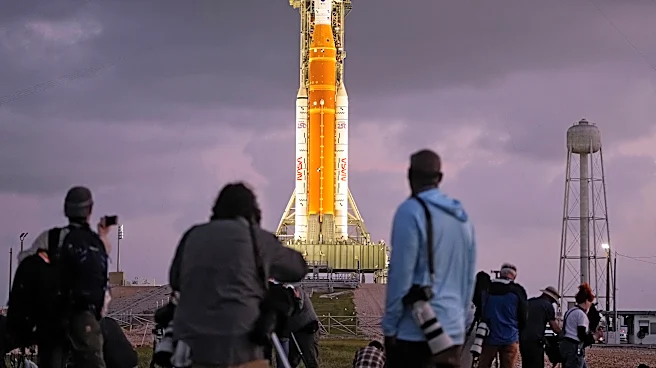
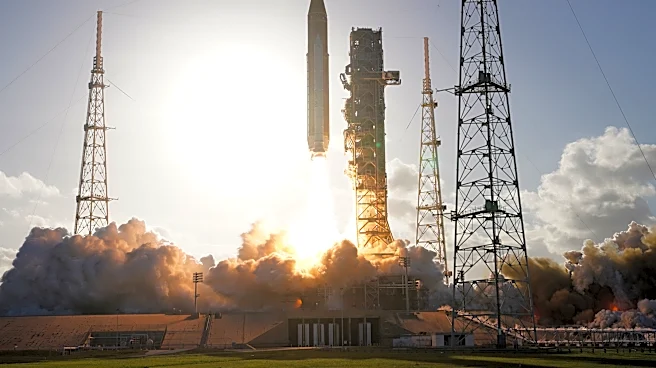
NASA has successfully launched the Artemis II mission, marking the first human journey beyond Earth's orbit in over 50 years. The mission involves a crew of four astronauts, including Commander Reid Wiseman, Pilot Victor Glover, Mission Specialist Christina
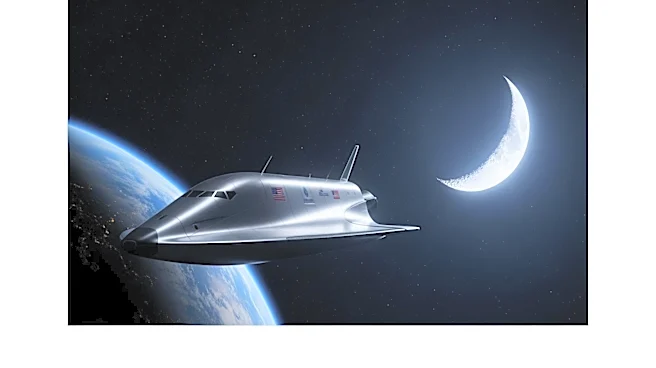
Koch, and Canadian Space Agency's Jeremy Hansen. The spacecraft will perform a figure-eight flyby around the moon, traveling 230,000 miles into space. This mission is a precursor to future lunar landings, with plans to land on the moon's surface by 2028.
Why It's Important?
The Artemis II mission represents a significant step in NASA's efforts to return humans to the moon and establish a sustainable presence. It serves as a critical test of the spacecraft's systems and the crew's ability to operate in deep space. The mission also lays the groundwork for future exploration, including potential missions to Mars. Success in these endeavors could lead to advancements in space technology, international collaboration, and inspire a new generation of space exploration.
What's Next?
Following the Artemis II mission, NASA plans to conduct further tests and missions to prepare for a lunar landing in 2028. The agency aims to establish a lunar base as a stepping stone for future Mars missions. The success of Artemis II will be closely monitored by international partners and private companies involved in space exploration, potentially influencing future collaborations and investments in space technology.