



What's Happening?
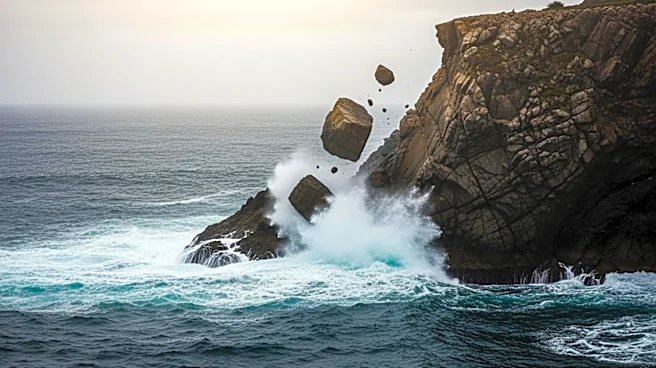
A new study has revealed that a massive landslide in Alaska on August 10, 2025, triggered a megatsunami, identified as the second-highest tsunami wave ever recorded. The landslide occurred in Alaska's Tracy Arm fjord, where debris from a mountainside
above a glacier fell into the water, creating a wave over 1,500 feet high. This event, driven by the landslide rather than an earthquake, generated seismic signals detected worldwide. The study, published in Science, provides insights into the conditions leading to the landslide and the resulting megatsunami, highlighting the role of the fjord's geography in amplifying the wave.
Why It's Important?
The study underscores the potential hazards posed by landslide-triggered tsunamis, particularly in regions with steep fjords like Alaska. Understanding these events is crucial for assessing risks to coastal communities and developing early warning systems. The findings also emphasize the importance of monitoring geological changes, such as glacier retreat, which can destabilize landscapes and increase the likelihood of landslides. The research contributes to a better understanding of tsunami dynamics, which is vital for improving safety measures and preparedness in vulnerable areas.
What's Next?
The study highlights the need for continued monitoring of geological activity in regions prone to landslides and tsunamis. Researchers may focus on developing more accurate predictive models and enhancing early warning systems to mitigate the impact of such natural disasters. Additionally, the study's findings could inform policy decisions regarding land use and development in high-risk areas, ensuring that communities are better prepared for future events.