








What's Happening?
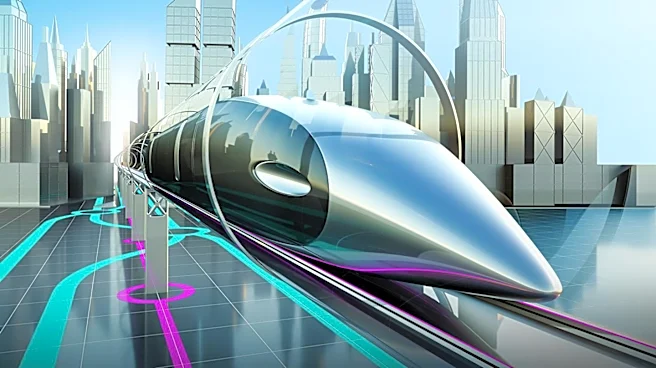
Georgia is exploring the feasibility of a high-speed passenger rail service connecting Atlanta to Savannah. The Georgia Department of Transportation (GDOT) recently conducted a survey to gauge public interest and willingness to pay for such a service,
with proposed travel times ranging from two-and-a-half to five hours and ticket prices from $100 to $300. This initiative comes as other states, such as Virginia, are investing significantly in expanding their passenger rail networks. The state has existing infrastructure and funding mechanisms, including federal funds secured by U.S. Senators Warnock and Ossoff for railroad safety, the Georgia Freight Railroad Program funded by the Georgia Locomotive Fuel Tax, and the Georgia Transit Trust Fund, which receives revenue from rideshare excise taxes. These resources could potentially support the development of a new rail line, which currently does not have an Amtrak route connecting Atlanta and Savannah.
Why It's Important?
The potential development of high-speed rail in Georgia holds significant implications for the state's economy and competitiveness. An efficient intercity rail system could alleviate Atlanta's notorious traffic congestion and improve connectivity between major economic hubs. By enhancing transportation options, Georgia could attract more businesses and residents, as states with robust rail infrastructure are better positioned to compete for jobs and talent. The success of private ventures like Florida's Brightline and state-supported systems like North Carolina's NC By Train demonstrate the potential for economic impact and increased ridership, even if direct profitability remains a challenge. Furthermore, a new rail line could provide crucial commuter service to growing employment centers like Bryan County's Hyundai metaplant, benefiting both employees and employers.
What's Next?
The results of GDOT's passenger rail survey will likely inform the next steps in evaluating the Atlanta-Savannah high-speed rail project. The state may explore various funding and operational models, potentially combining public-private partnerships, similar to how GDOT funds Georgia Express Lanes, with collaborations with entities like Amtrak, mirroring North Carolina's approach. There is also the possibility of leveraging private funding sources, drawing inspiration from Florida's Brightline service. Stakeholders, including political leaders, businesses, and civil society groups, will likely continue to debate the economic viability and societal benefits of such a large-scale infrastructure project. The ongoing investments in passenger rail by neighboring states will likely exert pressure on Georgia to advance its own transportation infrastructure to maintain regional competitiveness.
Beyond the Headlines
Beyond the immediate economic and transportation benefits, the discussion around high-speed rail in Georgia touches upon broader themes of regional development and quality of life. The perceived 'embarrassment' of Georgia's lagging rail development compared to other states highlights a potential shift in public and political priorities towards sustainable and efficient mass transit. The project could foster greater regional integration, connecting urban centers with coastal areas and facilitating tourism and business travel. Furthermore, the potential for commuter services to major industrial sites like the Hyundai metaplant underscores the evolving relationship between infrastructure development and industrial growth, suggesting that employers might even contribute to funding such projects. This initiative could also spark a re-evaluation of urban planning and land use around potential rail stations, leading to new development opportunities and changes in community dynamics.