



What's Happening?
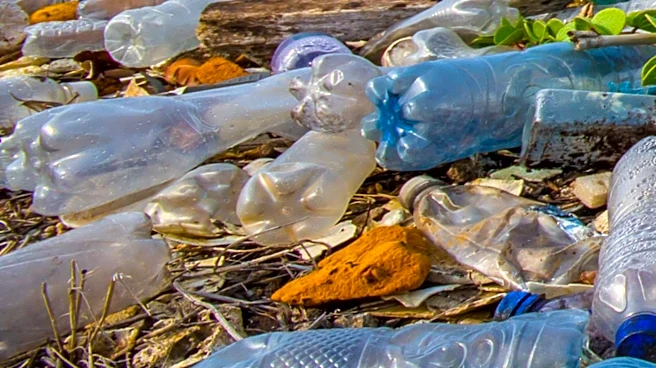
California's landmark single-use plastic law, Senate Bill 54, is facing challenges as approximately half of the plastic producers, packagers, and distributors have failed to report required data on the amount of plastic they sell. This information is crucial
for establishing a baseline to achieve the law's mandate of a 25% reduction in new single-use plastic by 2032. CalRecycle, the state waste agency, reported that not only are many producers missing, but much of the submitted data was inaccurate or incomplete. Initially, CalRecycle estimated the 2023 baseline at 2.9 million tons, but on November 2, it replaced this with a much smaller industry-provided baseline of 1.03 million tons. This decision was made despite no legal requirement to discard its own estimate, with CalRecycle Director Zoe Heller stating there was no need to reconcile the two figures. State Senator Catherine Blakespear (D-Encinitas) expressed concern over businesses not complying with the law, highlighting that this approach to extended producer responsibility was preferred by businesses to avoid a command-and-control structure from CalRecycle.
Why It's Important?
The discrepancy in reporting and the reduction of the baseline significantly undermine the effectiveness of California's plastic reduction goals. If the state had maintained its initial estimate, approximately 725,000 tons of single-use plastic would have been removed from state commerce by 2032, equating to about 37 pounds per Californian annually. With the industry-provided baseline, the reduction drops to only 250,000 tons, or 13 pounds per person. This diminished target means the law will have a substantially smaller environmental impact than originally intended. The situation also raises questions about the efficacy of extended producer responsibility laws when industry compliance is lacking. The failure of many companies to report, or to report accurately, creates an uneven playing field where compliant businesses bear the costs while 'free-riders' continue to contribute to plastic pollution without accountability, potentially disincentivizing sustainable packaging design.
What's Next?
CalRecycle plans to work with producers and the Circular Action Alliance, an industry group approved to run the program, to ensure future data submissions are accurate and verifiable. The agency also stated that the baseline number will continue to be refined through annual corrections, presumably as more companies report and data quality improves. However, this annual adjustment could lead to a rising production cap, potentially diluting the reduction targets further. If producers continue to misreport or fail to report, they could face potential penalties, though Senator Blakespear has called for stronger enforcement from CalRecycle. The ongoing legal challenges from some industry members against the law also indicate continued resistance. The effectiveness of the law hinges on increased compliance and robust enforcement to ensure that the intended environmental benefits are realized and that the burden of plastic waste management is appropriately shared by producers.
Beyond the Headlines
This situation highlights a critical tension in environmental policy: the balance between industry self-regulation and government oversight. The 'extended producer responsibility' model, favored by businesses, relies on companies taking charge of their product's lifecycle. However, the current reporting failures in California suggest that without stringent enforcement and clear accountability mechanisms, such models can fall short of their objectives. The reduction in the baseline also sets a precedent that could weaken future environmental regulations if industry-provided data, even when incomplete, is prioritized over state estimates. This could lead to a broader trend where environmental targets are diluted, making it harder to address pressing issues like plastic pollution. The ethical implications of companies failing to comply with environmental laws, especially those designed to protect public health and the environment, also come into focus, raising questions about corporate responsibility and the true cost of doing business.