





What's Happening?
A community alliance in Assam has issued demands concerning the Dibang Multipurpose Project in Arunachal Pradesh, a large-scale hydropower and flood-moderation scheme. The Assam–Arunachal Downstream Action Alliance has given authorities ten days to address
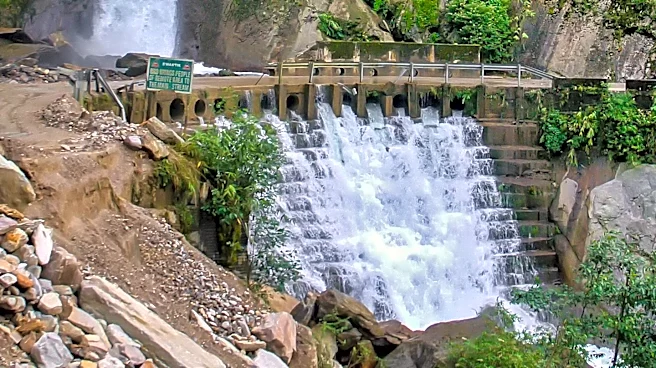
issues including rehabilitation, flood protection, and public hearings in Dibrugarh and Tinsukia. The alliance also seeks recognition of downstream families as project-affected. The project, developed by NHPC on the Dibang River, aims for an installed capacity of 2,880 megawatts (MW) through twelve 240-MW generating units. The Dibang River is part of the Brahmaputra river system, making downstream communities in Assam directly affected by upstream water management. Hydropower plants convert moving water into electrical energy using turbines and generators, with energy generation dependent on water flow and elevation difference. The project is termed 'multipurpose' due to its dual goals of electricity generation and flood moderation, which involves managing reservoir releases to reduce downstream flood peaks.
Why It's Important?
This dispute highlights the complex interplay between large-scale infrastructure projects, energy generation, environmental management, and community rights across state boundaries. The demands from downstream communities underscore the critical need for inclusive planning and impact assessment in major river projects. The project's dual purpose of hydropower and flood moderation means that operational decisions have direct consequences for both energy supply and flood risk management in the broader Brahmaputra basin. The alliance's call for recognition of downstream families as project-affected emphasizes the socio-economic impacts that extend beyond the immediate project site. The outcome of these negotiations could set precedents for how future large-scale water resource projects in the region address stakeholder concerns, particularly regarding equitable distribution of benefits and mitigation of adverse effects on communities reliant on river ecosystems.
What's Next?
The Assam–Arunachal Downstream Action Alliance has set a ten-day deadline for authorities to respond to their demands. Failure to meet these demands could lead to the alliance obstructing the transport of project materials, as they have threatened. This situation necessitates a prompt and comprehensive response from project developers and governmental bodies to engage with the affected communities. Future steps will likely involve further dialogue, potential negotiations, and possibly revised plans for rehabilitation, flood protection, and public participation. The resolution of this dispute will be crucial for the continued implementation of the Dibang Multipurpose Project and may influence the framework for community engagement in similar large-scale infrastructure developments in India. The project's progress hinges on addressing these community concerns effectively to avoid further delays and conflicts.
Beyond the Headlines
The Dibang Multipurpose Project dispute brings to light deeper ethical and governance questions surrounding large-scale development. It underscores the challenge of balancing national energy needs and flood control with the rights and livelihoods of local and downstream communities. The demand for recognizing downstream families as 'project-affected' challenges traditional definitions of project impact zones, advocating for a more holistic, basin-wide perspective on environmental and social consequences. This case could influence legal and policy frameworks regarding stakeholder consultation and compensation in multi-state river projects. It also highlights the cultural significance of rivers to communities and the potential for such projects to disrupt traditional ways of life, raising questions about environmental justice and equitable resource distribution in the context of national development.