


What's Happening?
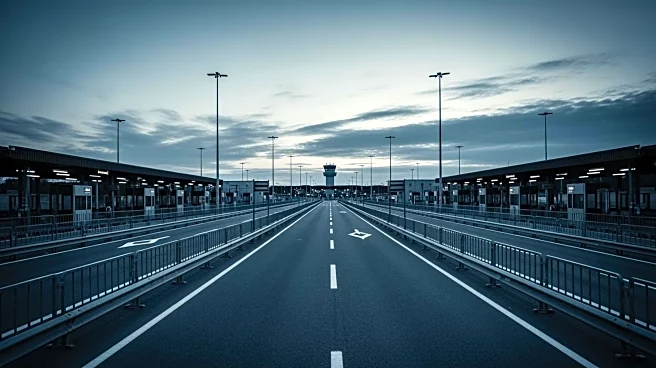
Israel has announced the reopening of the Rafah Crossing for pedestrian traffic only, following a security assessment. The crossing, which connects the Gaza Strip with Egypt, will operate under a mechanism previously used, involving European Union supervision
to ensure security measures are in place. The reopening is part of efforts to balance controlled civilian movement with Israeli security requirements. Entry and exit for Gaza residents will be coordinated with Egypt and require prior Israeli security approval. The crossing will not allow the movement of goods, focusing solely on pedestrian traffic.
Why It's Important?
The reopening of the Rafah Crossing is significant as it represents a critical point for movement and humanitarian access in the Gaza Strip. This decision reflects ongoing efforts to manage security concerns while addressing humanitarian needs. The involvement of the European Union in supervising the crossing highlights the international dimension of the security arrangements. For Gaza residents, the reopening provides a limited but essential means of movement, potentially easing some of the restrictions they face. However, the continued focus on security underscores the persistent tensions and challenges in the region.
What's Next?
The reopening of the Rafah Crossing is likely to be closely monitored by both Israeli and international stakeholders. Future developments may include adjustments to the security protocols or changes in the scope of the crossing's operations, depending on the security situation. The involvement of the European Union suggests that international diplomatic efforts may continue to play a role in managing the crossing. Additionally, reactions from Palestinian groups and residents will be crucial in determining the crossing's impact on the ground.