







What's Happening?
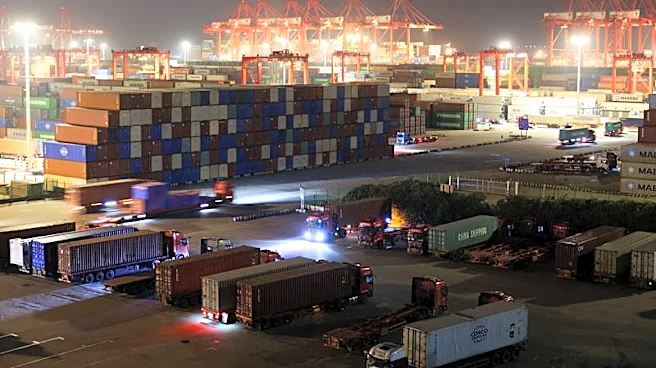
China's producer price index (PPI) rose by 3.9% in May, marking the highest increase in nearly four years. This surge is attributed to rising raw material costs due to the ongoing conflict in Iran and a significant investment boom in artificial intelligence
(AI). The National Bureau of Statistics reported that the PPI increase surpassed economists' forecasts and was driven by higher costs for fuel, power, and non-ferrous metals. Additionally, the demand for AI computing power has pushed up prices for tech equipment and semiconductors. Meanwhile, consumer prices rose by 1.2%, falling short of the expected 1.3% growth.
Why It's Important?
The rise in China's PPI highlights the global economic impact of geopolitical tensions and technological advancements. The Iran conflict has disrupted energy and raw material flows, affecting global supply chains. The AI investment boom reflects China's strategic focus on emerging technologies, which could shift global tech dynamics. These developments may influence U.S. industries reliant on Chinese imports, potentially leading to increased costs for American businesses and consumers. The situation underscores the interconnectedness of global economies and the potential for international conflicts to affect domestic markets.
What's Next?
As China continues to invest in AI and navigate the economic impacts of the Iran conflict, global markets may experience further volatility. U.S. businesses might need to reassess their supply chains and explore alternative sources for raw materials and tech components. Additionally, policymakers may consider strategies to mitigate the impact of rising costs on consumers. The ongoing developments in China could also prompt discussions on international trade policies and technological collaborations.
Beyond the Headlines
The surge in China's PPI and the AI investment boom may have long-term implications for global economic power dynamics. China's focus on AI and technology could position it as a leader in these fields, challenging the U.S. and other nations. This shift could influence global standards and regulations in technology and trade. Furthermore, the economic strain from the Iran conflict may prompt China to strengthen its alliances and seek new partnerships, potentially altering geopolitical relationships.