







What's Happening?
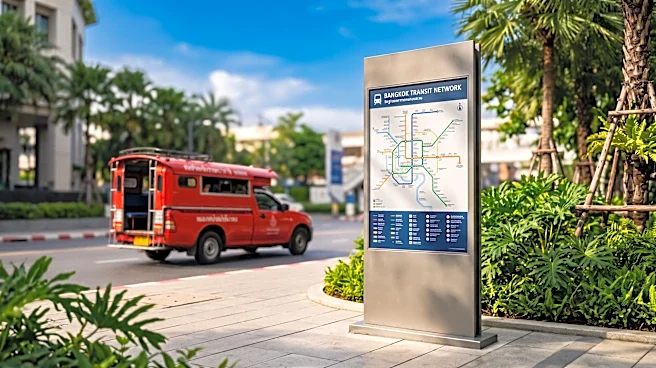
Bangkok has installed 47 new information signs across three districts—Sathorn, Bang Rak, and Yannawa—to improve the navigation and connectivity of its informal 'songthaew' transport network. These signs provide essential details such as route names and maps,
operating hours, travel directions, and connections to other public transport services, including the BTS (Bangkok Mass Transit System), MRT (Mass Rapid Transit) rail systems, public buses, the Bus Rapid Transit (BRT) network, and boat services. This initiative, a collaboration between the Bangkok Metropolitan Administration (BMA), the Muang Vivat Foundation, and the urban transport advocacy group Mayday, aims to strengthen 'first- and last-mile' connectivity, linking local neighborhoods and smaller streets with the city's main public transport infrastructure. BMA adviser Aekvarunyoo Amrapala stated that this information will eventually be accessible online.
Why It's Important?
The introduction of these information signs is a significant step towards formalizing and integrating Bangkok's extensive songthaew network into the city's broader public transport system. Songthaews, while flexible and affordable, have historically lacked standardized schedules and clear operating protocols, making them challenging for commuters and tourists to use efficiently. By providing clear, accessible information, the initiative enhances the usability of these services, improving daily commutes for residents and making the city more navigable for visitors. This improved 'first- and last-mile' connectivity is crucial for a megacity like Bangkok, where main transport hubs often require supplementary local transport to reach final destinations. The move also acknowledges the vital role of informal transport in urban mobility and seeks to address its operational shortcomings through structured interventions.
What's Next?
The BMA plans to make the songthaew information accessible online, further enhancing convenience for users. A 2025 study by the King Prajadhipok’s Institute recommended establishing clearer operating protocols and providing subsidies for songthaew operators, alongside creating a government agency to oversee feeder transport services. These recommendations suggest potential future policy directions aimed at further standardizing and supporting the songthaew network. The success of this initial phase in Sathorn, Bang Rak, and Yannawa districts could lead to the expansion of similar information signage and integration efforts across other parts of Bangkok, progressively improving urban mobility and connectivity throughout the city.
Beyond the Headlines
This initiative reflects a growing global trend in urban planning to integrate informal transport systems into formal public networks, recognizing their essential role in providing accessible and affordable mobility. By formalizing aspects of songthaew operations, Bangkok is not only improving efficiency but also potentially enhancing safety and reliability for passengers. This approach can foster a more inclusive urban environment, ensuring that residents in smaller streets and neighborhoods have better access to the city's economic and social opportunities. Furthermore, the move could set a precedent for other cities grappling with similar challenges, demonstrating how strategic information dissemination and collaboration with local transport providers can lead to significant improvements in urban transport infrastructure and user experience.