









What's Happening?
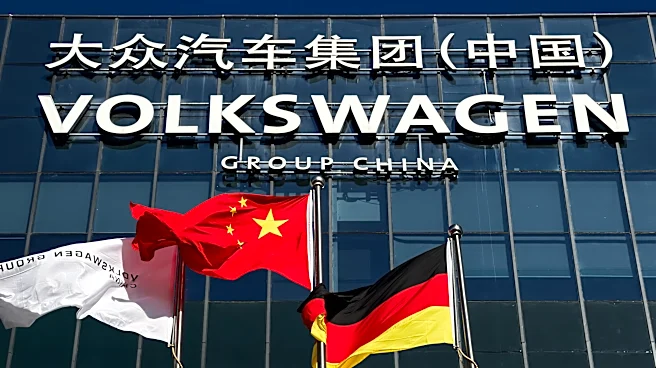
Chinese automotive manufacturers are rapidly expanding their presence in Europe, challenging the traditional dominance of German carmakers. Companies like BYD, SAIC, and Geely have increased their market share by offering vehicles at significantly lower
prices than their Western counterparts. This expansion is part of a broader Chinese strategy to leverage its manufacturing capabilities globally. Meanwhile, German automakers like Volkswagen are facing significant restructuring challenges, including potential job cuts and factory closures, as they struggle to adapt to changing market conditions and increased competition. The high energy costs in Europe, driven by aggressive decarbonization policies, further exacerbate the competitiveness issues faced by European manufacturers.
Why It's Important?
The expansion of Chinese automakers in Europe signifies a shift in the global automotive industry, with potential implications for U.S. manufacturers. As Chinese companies gain market share by offering competitively priced vehicles, traditional automakers in Europe and potentially the U.S. may face increased pressure to innovate and reduce costs. The situation highlights the broader geopolitical strategy of China to increase foreign dependence on its manufacturing capabilities, which could have long-term implications for global trade dynamics. Additionally, the high energy costs in Europe serve as a cautionary tale for U.S. policymakers regarding the balance between environmental goals and industrial competitiveness.
What's Next?
European automakers may need to explore strategic partnerships with Chinese manufacturers or invest in new technologies to remain competitive. The EU's response to this challenge, including potential regulatory changes and energy cost adjustments, will be crucial in determining the future landscape of the automotive industry. For U.S. stakeholders, monitoring these developments could provide insights into potential market shifts and inform strategic decisions in the face of increasing global competition.
Beyond the Headlines
The situation underscores the complex interplay between environmental policies and industrial competitiveness. As Europe grapples with high energy costs due to its decarbonization efforts, the U.S. may need to consider similar challenges as it pursues its own environmental goals. The rise of Chinese automakers also raises questions about the long-term sustainability of relying on low-cost manufacturing as a competitive advantage, particularly in the context of geopolitical tensions and trade dependencies.