



What's Happening?
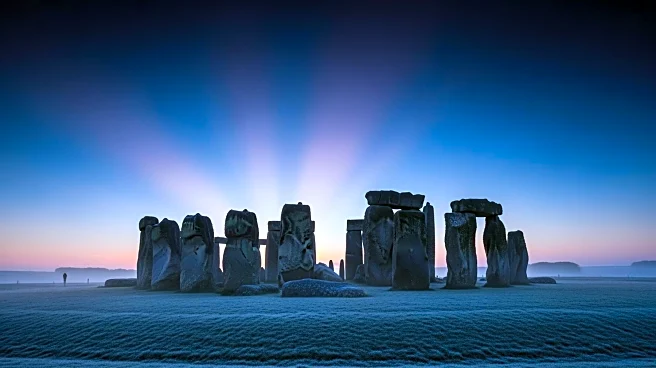
Stonehenge is set to welcome visitors for the 2025 Winter Solstice, with sunrise expected at 08:09 GMT on December 21. English Heritage, the organization managing the site, has announced that visitors must pre-book parking to manage traffic congestion
and ensure safety. The site will open at 05:15 GMT, and visitors are advised to arrive by 07:30 GMT to ensure entry. Parking fees are set at £15 for cars, £5 for motorcycles, and £20 for motorhomes. A special bus service from Salisbury is available to encourage the use of public transport. Visitors are reminded to wear warm clothing, bring a torch, and respect the site's sacred nature by not touching or climbing the stones. English Heritage will also livestream the event on its YouTube channel.
Why It's Important?
The Winter Solstice at Stonehenge is a significant cultural and historical event, drawing visitors from around the world. The new guidelines aim to enhance visitor experience while preserving the site's integrity. By requiring pre-booked parking and promoting public transport, English Heritage seeks to reduce environmental impact and traffic congestion. This approach reflects broader efforts to balance tourism with conservation, ensuring that such heritage sites remain accessible and protected for future generations. The event also highlights the importance of cultural heritage in fostering community and international connections.
What's Next?
As the Winter Solstice approaches, English Heritage will continue to monitor visitor numbers and traffic patterns to refine their management strategies. The success of these measures could influence future events at Stonehenge and other heritage sites. Stakeholders, including local authorities and tourism operators, may collaborate to further improve infrastructure and services. The livestreaming of the event could also set a precedent for virtual access to cultural events, expanding their reach and inclusivity.
Beyond the Headlines
The management of the Winter Solstice event at Stonehenge underscores the challenges of preserving cultural heritage in the face of increasing tourism. It raises questions about the sustainability of such events and the role of technology in enhancing accessibility. The emphasis on respecting the site's sacred nature highlights the need for cultural sensitivity and awareness among visitors. This event serves as a reminder of the delicate balance between celebrating cultural traditions and protecting historical sites.