

What's Happening?
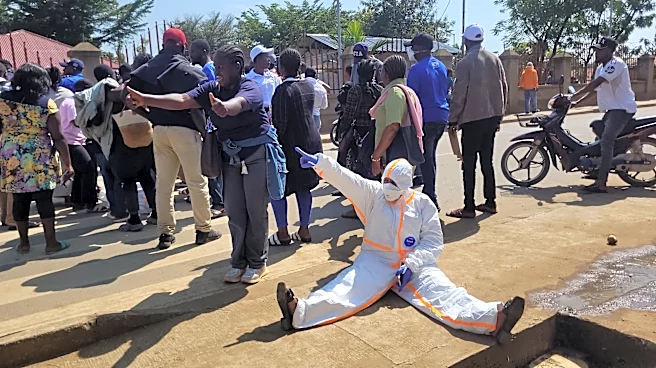
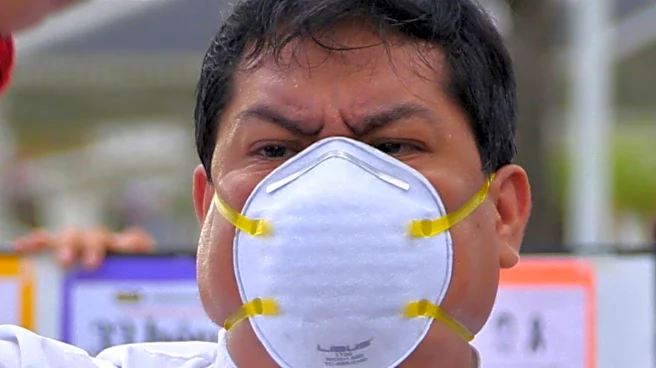
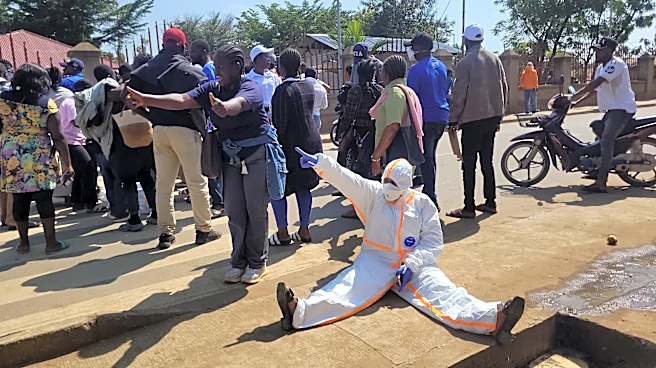
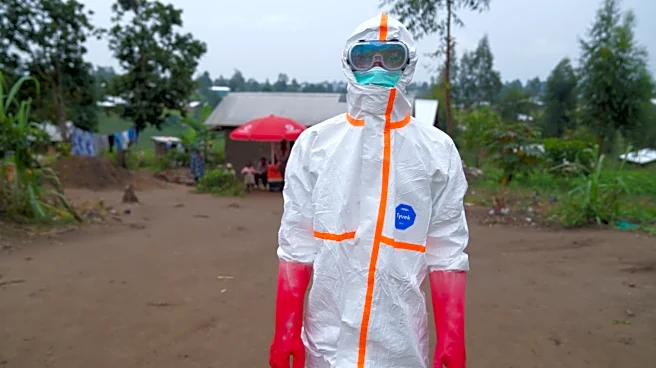
Health officials in the Democratic Republic of the Congo (DRC) are concerned that the Ebola virus, responsible for a significant outbreak, may be mutating. The outbreak, caused by the Bundibugyo strain, has resulted in over 4,000 cases and 1,801 deaths
as of August 4. The Africa Centres for Disease Control and Prevention (Africa CDC) is scaling up response efforts, including door-to-door case searches and community involvement. The outbreak is centered in the conflict-affected Ituri province but has spread to other regions. The DRC's public health institute is investigating a suspected Ebola death on a boat, with passengers being quarantined and tested.
Why It's Important?
The potential mutation of the Ebola virus poses a significant public health challenge, as it could complicate containment efforts and increase transmission rates. The outbreak's scale and severity highlight the need for robust public health responses and international support. The situation underscores the importance of rapid response measures, such as contact tracing and vaccination, to prevent further spread. The outbreak also impacts essential healthcare services, as fear of infection disrupts routine medical care, including vaccinations for other diseases like measles.
What's Next?
Health officials plan to use antiviral treatments and test vaccines to manage the outbreak. The Africa CDC is shifting strategies to enhance case detection and community engagement. International collaboration and support will be crucial in addressing the outbreak and preventing further spread. The situation may prompt a reevaluation of global health preparedness and response strategies, particularly in conflict-affected regions.