



What's Happening?
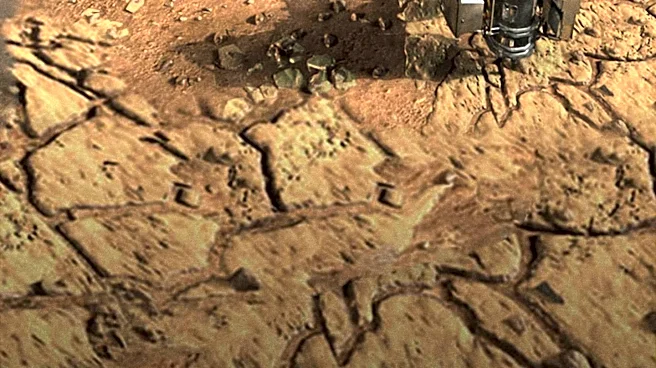
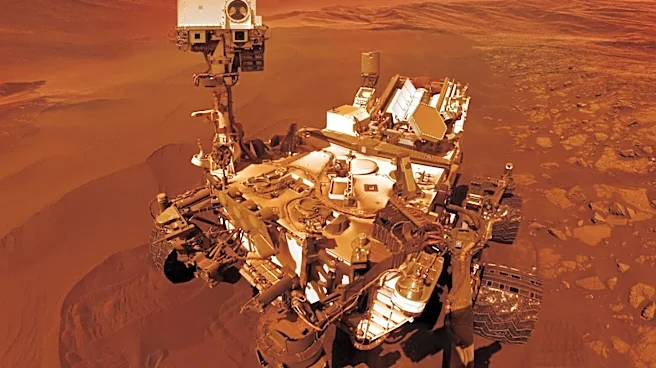
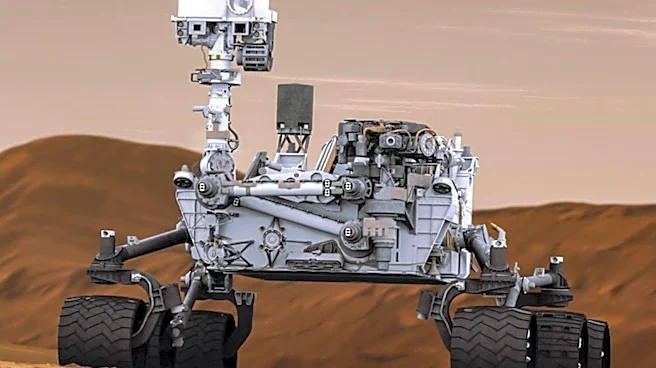
NASA's Curiosity rover has discovered a unique honeycomb-like landscape on Mars while exploring a Martian valley known as 'Valle Grande.' The rover captured images showing polygonal fractures across the terrain, each measuring between 1.5 to 3 inches.
This discovery marks the first time such extensive formations have been observed on Mars. The patterns, which also appear on the sides of a nearby butte called 'Miraflores,' are believed to have formed through processes such as repeated warming and cooling or compression. Scientists are currently studying these formations to understand their origins. This finding adds to Curiosity's long list of discoveries since its landing on Mars in 2012, which have significantly enhanced our understanding of the planet's history and potential for past life.
Why It's Important?
The discovery of these polygonal formations is significant as it provides new insights into the geological processes on Mars. Understanding these formations could help scientists learn more about the planet's climate history and its potential to have supported life. The presence of such patterns suggests that Mars underwent significant environmental changes, possibly involving water, which is crucial for understanding the planet's habitability. This finding also highlights the importance of continued exploration and study of Mars, as each discovery brings us closer to understanding the planet's past and its potential for future human exploration.