







What's Happening?
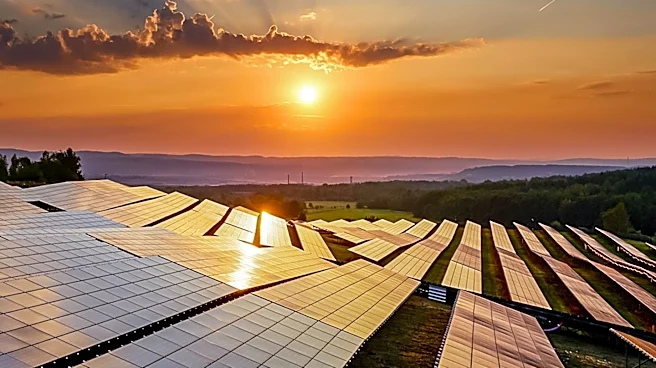
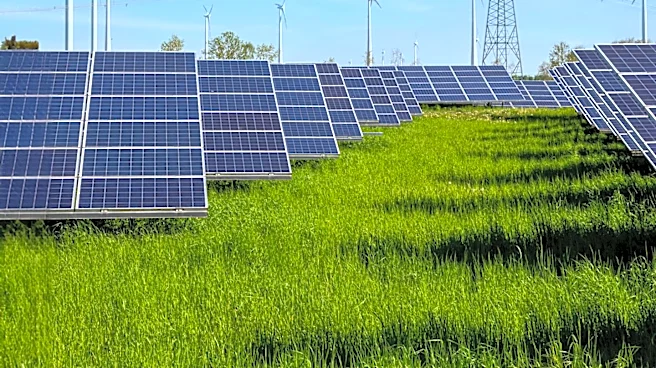
Syria is embarking on a significant renewable energy investment initiative aimed at linking energy development with job creation and industrial recovery. An agreement has been reached between the Syrian government and a consortium of Saudi and international
investors to build three solar power plants with a combined capacity of 760 MW. This initiative is part of a broader plan to rehabilitate and expand the country's energy infrastructure, potentially adding around 2,000 MW of capacity. The International Labour Organization (ILO) is involved in this effort, working with Syrian ministries, employers, and workers to ensure that the energy strategy not only increases electricity supply but also addresses industrial competitiveness and employment. The ILO plans to train 1,000 individuals in renewable energy installation, operation, and maintenance, focusing on integrating returnees, internally displaced people, and host community members into the workforce.
Why It's Important?
This initiative is crucial for Syria as it seeks to rebuild its economy and infrastructure after years of conflict. By increasing electricity capacity, the country aims to alleviate energy costs and supply constraints that have hampered industrial production. The success of this initiative could lead to more reliable and affordable electricity, which is essential for maintaining industrial output and competitiveness. Additionally, the training program could provide much-needed employment opportunities, helping to integrate marginalized groups into the labor market. For investors, the project offers a chance to participate in Syria's economic recovery, provided that regulatory and financial conditions are favorable. The initiative also highlights the potential for renewable energy to play a pivotal role in post-conflict reconstruction, offering a model that could be replicated in other regions facing similar challenges.
What's Next?
The next steps involve moving from agreement to implementation. Key challenges include securing financing, completing construction, and connecting the new capacity to the grid. Policymakers will need to ensure that electricity prices remain competitive to support industrial growth while attracting sufficient investment to sustain the energy system. The success of the training program will depend on its alignment with actual job market demands, requiring coordination between energy developers, training institutions, and employers. The outcome of these efforts will be closely watched by international partners and investors, who are interested in the project's potential to deliver measurable economic and social benefits.
Beyond the Headlines
The initiative raises important questions about the integration of renewable energy into national energy policies and its impact on industrial competitiveness. As factories potentially generate their own electricity, regulatory frameworks will need to address how private generation interacts with the national grid. The inclusion of battery storage in the solar projects adds complexity, requiring careful planning to manage energy supply fluctuations. The broader implications of this initiative extend beyond energy supply, as it could influence labor market dynamics and industrial policy in Syria. Successful implementation could demonstrate the viability of using renewable energy as a catalyst for economic recovery and social development in post-conflict settings.