





What's Happening?
The International Renewable Energy Agency (IRENA), in collaboration with the International Institute for Environment and Development (IIED), has developed the Growth through Energy Agriculture and Resilience (GEAR) Framework. This new framework aims to
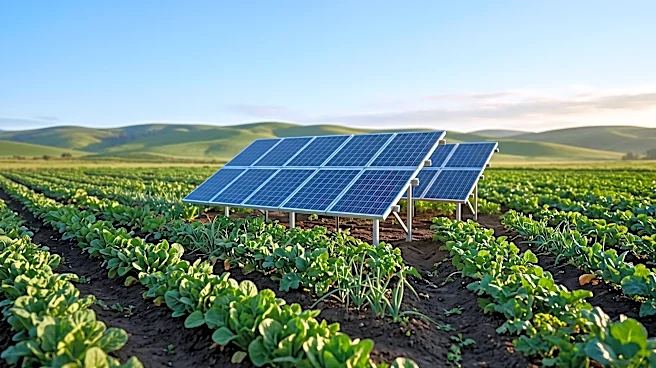
measure climate resilience specifically enabled by decentralized renewable energy (DRE) in the agricultural sector. The initiative addresses a critical need to quantify the climate benefits of DRE interventions, moving beyond simply tracking DRE connections. The GEAR Framework adopts a practical, people-first approach, focusing on how energy solutions can enhance adaptive and anticipatory resilience within agricultural communities. It also considers important factors such as gender, equity, and the specific realities faced by these communities. The framework is designed to help stakeholders better understand and quantify the broader impacts of DRE in agriculture, ultimately facilitating access to climate finance by linking renewable energy interventions with tangible climate adaptation outcomes.
Why It's Important?
The introduction of the GEAR Framework is significant for several reasons. Firstly, it provides a standardized method for assessing the climate resilience contributions of decentralized renewable energy in agriculture, which has historically been difficult to measure. This clarity can unlock crucial climate finance for projects that might otherwise struggle to demonstrate their full impact. By focusing on a 'people-first' approach, the framework ensures that the benefits extend directly to agricultural communities, improving their ability to adapt to and anticipate climate challenges. This is particularly vital in regions heavily reliant on agriculture and vulnerable to climate change. The framework's emphasis on gender and equity also highlights its potential to promote inclusive development, ensuring that the benefits of renewable energy and climate resilience are distributed fairly. For the U.S. and international development agencies, this framework could serve as a model for evaluating and funding similar initiatives globally, promoting sustainable agricultural practices and energy independence in developing nations.
What's Next?
The immediate next steps involve the dissemination and adoption of the GEAR Framework by various stakeholders, including governments, international organizations, financial institutions, and local communities. IRENA and IIED will likely engage in outreach and training programs to ensure the framework is effectively implemented. The success of the framework will depend on its practical application in real-world scenarios and its ability to consistently demonstrate the climate resilience benefits of DRE in agriculture. This could lead to increased investment in decentralized renewable energy projects in agricultural regions, particularly those in developing countries. Furthermore, the framework could evolve as more data and case studies become available, potentially leading to refinements and broader applications in other sectors facing climate vulnerabilities. The development of common frameworks like GEAR is crucial for more effectively linking energy access, climate resilience, and investment decisions on a global scale.
Beyond the Headlines
The GEAR Framework touches upon deeper implications beyond immediate climate finance. It underscores the growing recognition that climate action must be integrated with social and economic development, particularly in vulnerable sectors like agriculture. The 'people-first' and equity-focused approach challenges traditional development models that might overlook the specific needs and realities of local communities. This framework could foster a more holistic understanding of sustainability, where energy solutions are not just about reducing emissions but also about building community resilience, enhancing livelihoods, and promoting social justice. It highlights the interconnectedness of energy, agriculture, and climate adaptation, suggesting a paradigm shift towards integrated solutions. The framework also implicitly advocates for greater data collection and transparent reporting on the impacts of renewable energy, which can drive more informed policy-making and investment strategies in the long term.