





What's Happening?
China's People's Liberation Army (PLA) has conducted live-fire drills of a new missile-based air-defense system, as reported by China Central Television (CCTV). The drills took place in the Gobi Desert, involving the PLA's 73rd Group Army. The system, an
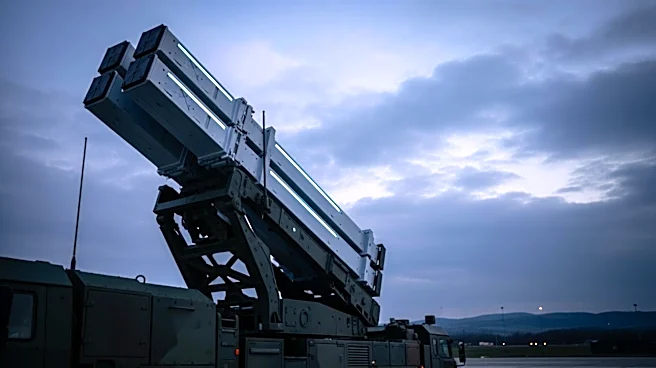
upgraded variant of the HQ-16 surface-to-air missile family, demonstrated its capability to intercept multiple target types at a range of 50 km. The system features a launcher vehicle with six missile pods and is compatible with naval vertical launch systems, allowing for 360-degree engagement. The drills tested the system's effectiveness under challenging terrain and electromagnetic interference conditions.
Why It's Important?
The development and testing of this new air-defense system underscore China's ongoing efforts to enhance its military capabilities. The HQ-16 system's compatibility with naval vertical launch systems suggests a strategic focus on improving both land and maritime defense operations. This advancement could shift the balance of military power in the region, prompting neighboring countries to reassess their defense strategies. The successful demonstration of the system's capabilities may also influence global defense markets, as countries seek to acquire or develop similar technologies to bolster their air defense networks.
What's Next?
Following the successful drills, China may proceed with further testing and eventual deployment of the new air-defense system. The PLA could integrate this system into its broader defense strategy, potentially enhancing its operational readiness and deterrence capabilities. Other nations, particularly those in the Asia-Pacific region, may respond by strengthening their own air defense systems to counterbalance China's advancements. Additionally, the international defense community will likely monitor China's military developments closely, considering potential implications for regional security dynamics.