





What's Happening?
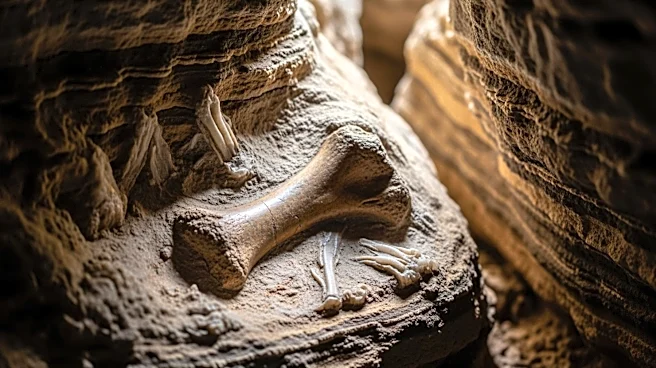
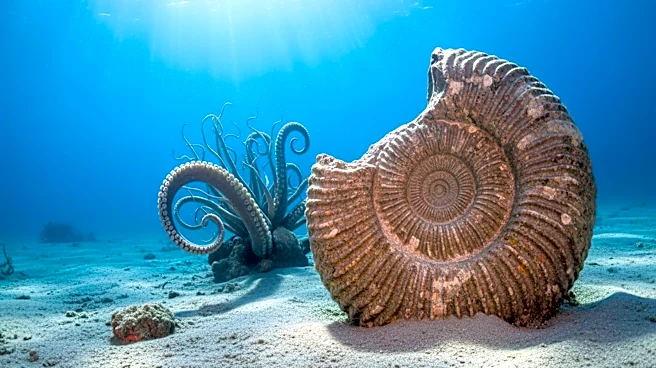
New research published in the journal Science has uncovered fossil evidence of giant octopuses, measuring up to 62 feet in length, that were apex predators in the Cretaceous seas. The study, led by Yasuhiro Iba from Hokkaido University, utilized advanced
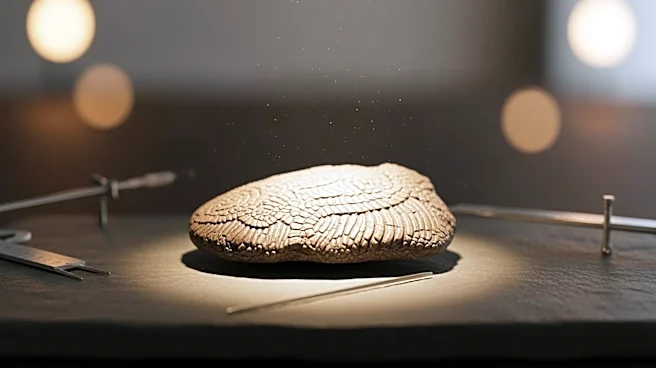
imaging techniques to analyze fossilized jaws, revealing the octopuses' capability to crush hard prey like bones and shells. These findings suggest that the octopuses, identified as Nanaimoteuthis, played a significant role in the marine food web, challenging the notion that large vertebrates were the sole top predators of the time.
Why It's Important?
The discovery of these giant octopuses as apex predators provides new insights into the complexity of ancient marine ecosystems. It highlights the ecological significance of cephalopods, which have been historically underestimated due to the scarcity of fossil evidence. This research prompts a reevaluation of the evolutionary history of marine predators and their interactions within the food web. The study also demonstrates the potential of digital fossil mining techniques to uncover hidden aspects of ancient biodiversity.
What's Next?
The findings pave the way for further research into the ecological roles of cephalopods in ancient oceans. Scientists may continue to explore fossil sites using advanced imaging technologies to uncover more about the behaviors and adaptations of these ancient predators. Additionally, the study may inspire new investigations into the evolutionary pressures that shaped the development of such large and powerful cephalopods.