


What's Happening?
The Department of Justice (DOJ) has confirmed that it logs all searches conducted by members of Congress on its data systems containing evidence related to Jeffrey Epstein. This measure is intended to prevent the unauthorized release of information about
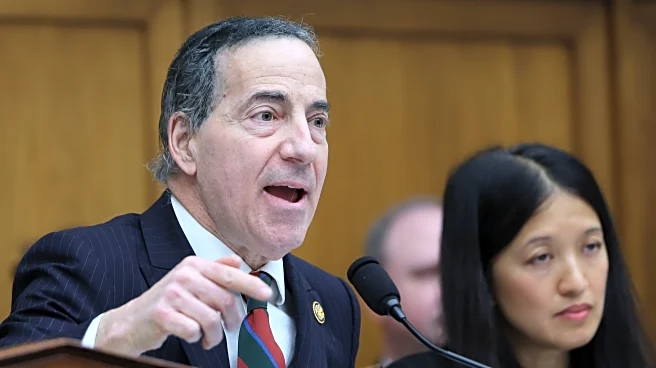
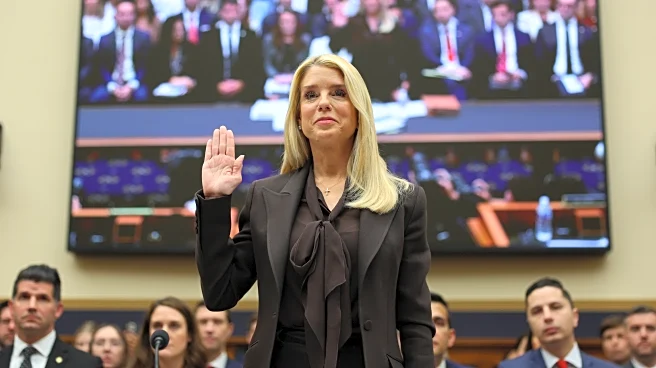
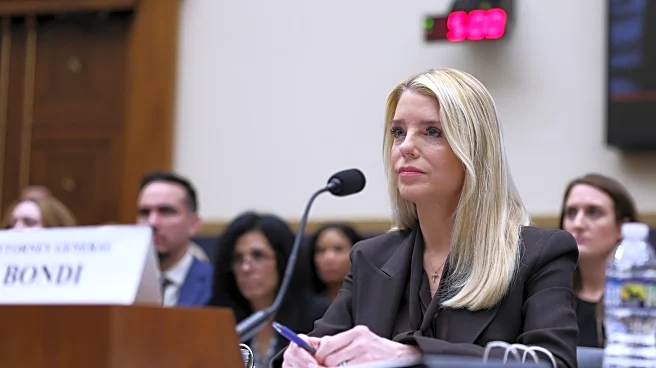
Epstein's victims. The announcement follows a House Judiciary Committee hearing where it was revealed that Attorney General Pam Bondi had records of searches made by Rep. Pramila Jayapal. Jayapal criticized the monitoring as 'totally inappropriate' and 'outrageous.' The DOJ's actions have sparked demands from Congress for an investigation into the department's tracking practices, which some lawmakers argue may infringe on the separation of powers.
Why It's Important?
The DOJ's monitoring of congressional searches raises significant concerns about privacy and the balance of power between government branches. By tracking these searches, the DOJ aims to protect sensitive victim information, but it also raises questions about potential overreach and the implications for legislative oversight. This situation highlights the ongoing tension between ensuring transparency and protecting privacy, especially in high-profile cases like Epstein's. The controversy could lead to broader discussions about the limits of executive power and the need for clear guidelines on data access and privacy for elected officials.
What's Next?
In response to the controversy, Congress may pursue an investigation into the DOJ's practices, potentially leading to hearings or legislative action to address privacy concerns. Lawmakers could seek to establish clearer boundaries for executive monitoring of congressional activities. Additionally, the DOJ may face pressure to justify its actions and provide more transparency about its data protection measures. The outcome of these developments could influence future interactions between Congress and the DOJ, as well as set precedents for handling sensitive information in government databases.