





What's Happening?
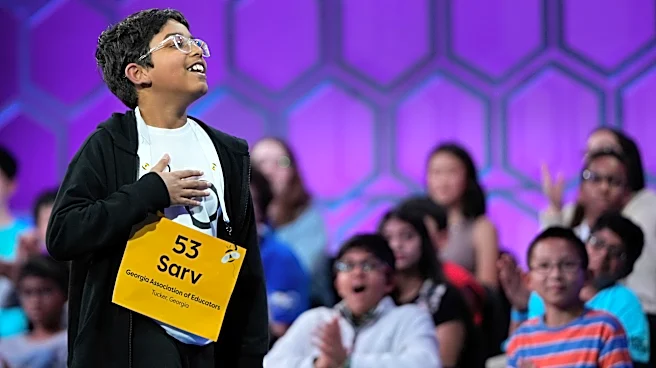
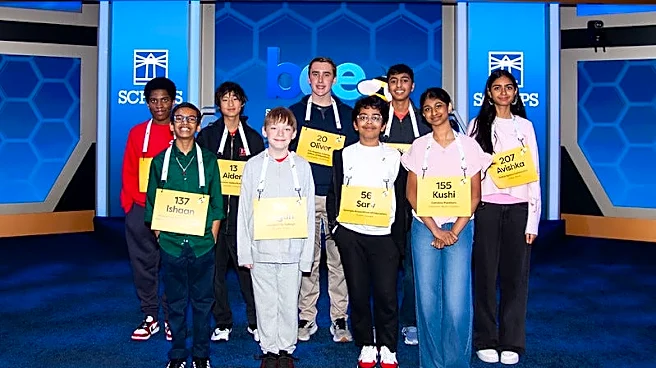
The Scripps National Spelling Bee has sparked a debate among participants regarding the best approach to spelling mastery. Shrey Parikh, a 14-year-old finalist, employs a strategy involving multiple coaches and extensive study of word roots and language
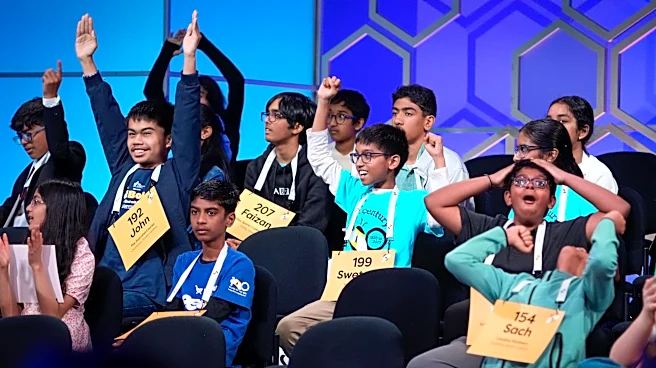
patterns. In contrast, Sarv Dharavane, another finalist, relies solely on the Merriam-Webster's Unabridged dictionary without external coaching. This divergence in preparation methods highlights a broader discussion within the spelling community about the balance between memorization and understanding language structures. The competition, which tests participants on their ability to spell complex words, sees contenders using varied techniques to reach the finals.
Why It's Important?
The differing strategies among spelling bee participants reflect broader educational debates about learning methodologies. The emphasis on either memorization or conceptual understanding can influence educational practices and curriculum development. For students, educators, and parents, these discussions may inform decisions on how best to prepare for academic challenges. The spelling bee serves as a microcosm of these educational philosophies, showcasing the effectiveness of different learning styles and their impact on student performance.
What's Next?
As the finals approach, participants will continue to refine their strategies, with some focusing on memorization and others on mastering language patterns. The outcome of the competition may influence future contestants' preparation methods. Additionally, educational institutions and coaches may analyze the results to determine the most effective approaches for teaching language and spelling skills. The ongoing debate may also lead to further research into the cognitive processes involved in language acquisition and memory.