
What's Happening?
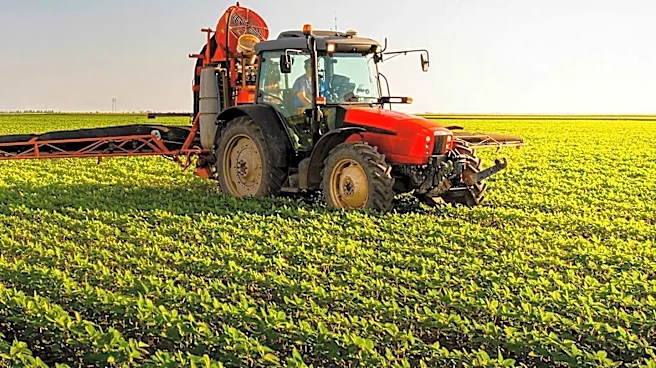
The ongoing conflict in Iran has led to significant economic repercussions globally, particularly affecting U.S. farmers. The closure of the Strait of Hormuz has caused a dramatic increase in fertilizer
prices, with about 70% of U.S. farmers reporting an inability to afford necessary supplies, according to a survey by the American Farm Bureau Federation. This situation is expected to lead to higher food prices in the U.S. Additionally, the war has driven up fuel costs, impacting transportation and production expenses across various sectors. The World Food Programme has highlighted the war's contribution to global hunger, as resources are reallocated from the hungry to the starving.
Why It's Important?
The economic strain on U.S. farmers due to increased fertilizer costs could lead to a rise in food prices, affecting consumers nationwide. The broader economic impact includes higher transportation costs due to increased fuel prices, which could lead to inflationary pressures across multiple industries. The situation underscores the interconnectedness of global events and their direct impact on domestic economies. The war's contribution to global hunger also raises ethical concerns about resource allocation and humanitarian priorities.
What's Next?
As the conflict continues, U.S. policymakers and agricultural stakeholders may need to explore alternative solutions to mitigate the impact on farmers, such as subsidies or sourcing alternative fertilizer supplies. The ongoing economic pressures could prompt discussions on energy independence and the diversification of supply chains to reduce vulnerability to international conflicts.
Beyond the Headlines
The situation highlights the ethical dilemma of resource allocation in times of crisis, as well as the long-term implications for global food security. The increased costs for U.S. farmers may also accelerate the adoption of sustainable agricultural practices as a means to reduce dependency on imported fertilizers.