



What's Happening?
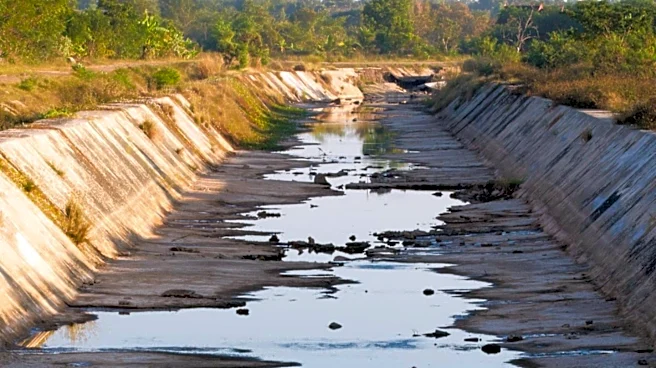
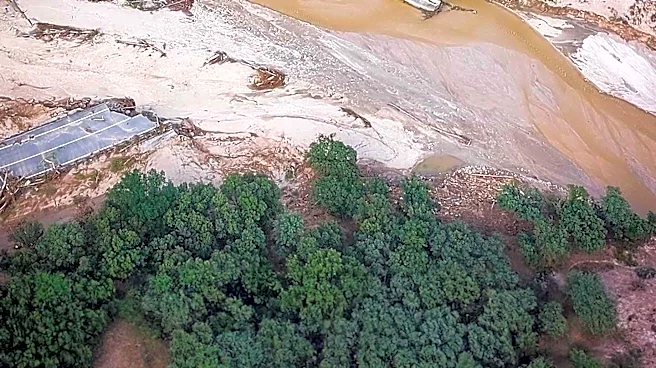
The City of Mount Pleasant, Texas, has requested its residents to limit outdoor water usage due to significant damage sustained by its water treatment plant in July. This damage has led to a reduced production capacity at the plant, necessitating conservation
efforts to preserve the city's water storage reserves. Specifically, residents are asked to restrict outdoor watering activities to between midnight and 6 a.m. This measure is described as temporary, intended to help the city manage water production limitations until replacement parts arrive and the plant's full capacity can be restored. The city has confirmed that despite the damage, water pressure and quality remain unaffected.
Why It's Important?
The implementation of water restrictions in Mount Pleasant, Texas, highlights the vulnerability of essential public infrastructure to unforeseen events and the critical need for water conservation. Damage to a water treatment plant can severely impact a community's ability to provide a consistent and safe water supply, affecting daily life, public health, and local businesses. For residents, limiting outdoor water use can be an inconvenience, but it is crucial for maintaining adequate water reserves for indoor use and emergency services. For businesses, particularly those reliant on water for operations like landscaping or car washes, these restrictions can lead to operational adjustments and potential revenue impacts. This situation underscores the importance of resilient infrastructure and community cooperation in managing vital resources.
What's Next?
The City of Mount Pleasant will continue to monitor water production capacity, system pressures, storage levels, and overall demand on a weekly basis to determine the necessity and duration of the water restrictions. The city is awaiting replacement parts for the damaged water treatment plant, and the lifting of restrictions will depend on the successful repair and restoration of the plant's full production capacity. Residents are expected to adhere to the outdoor watering schedule, and public communication from the city will likely continue to provide updates on the repair progress and water conservation efforts. The long-term implications may include a review of infrastructure resilience and emergency preparedness plans.
Beyond the Headlines
This incident in Mount Pleasant, Texas, reflects a broader national challenge concerning aging infrastructure and the increasing frequency of severe weather events that can compromise critical systems. Beyond the immediate inconvenience, such events can prompt communities to re-evaluate their water management strategies, invest in infrastructure upgrades, and promote long-term water conservation habits. The reliance on specific parts for repairs also exposes supply chain vulnerabilities, which can delay recovery efforts. This situation serves as a reminder that maintaining robust and resilient public utilities is not just a matter of convenience but a fundamental aspect of community well-being and economic stability, requiring proactive planning and investment.