


What's Happening?
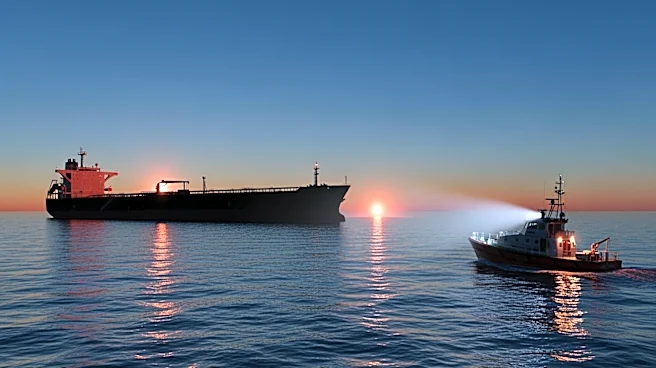
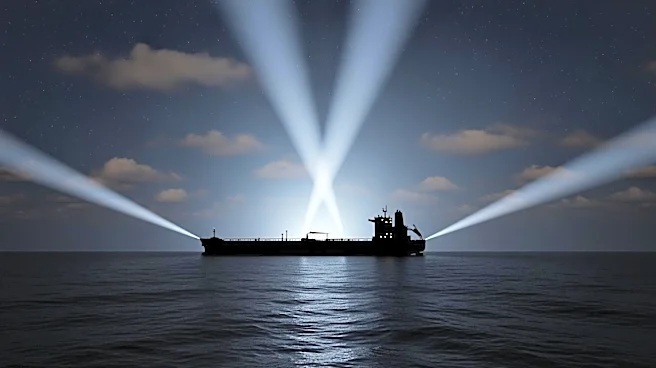
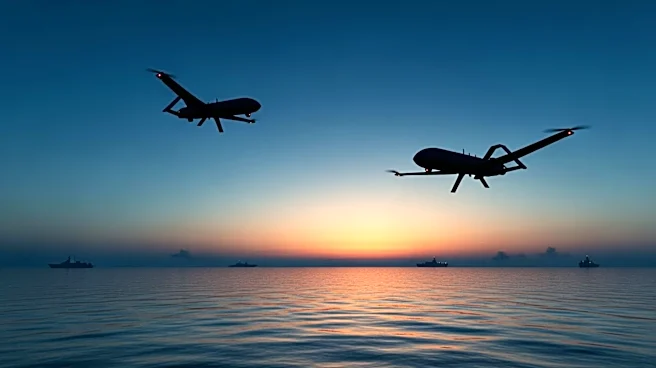
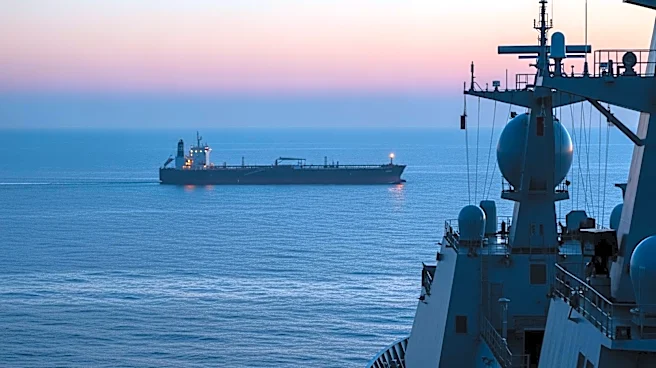
U.S. forces disabled an unladen oil tanker, the M/T Marivex, in the Gulf of Oman after it attempted to sail to an Iranian port, violating the ongoing blockade against Iran. The U.S. Central Command reported that the vessel, flagged under Palau, was targeted
by an F/A-18 Super Hornet from the USS Abraham Lincoln, which fired a precision munition into the ship's engineering and steering spaces. The tanker, carrying 24 Indian crew members, was reported to have caught fire, but all crew members were safely rescued with the assistance of Omani authorities. The blockade, initiated in April, restricts vessels from traveling to or from Iran, and the Marivex had previously been sanctioned by the U.S. Treasury's Office of Foreign Assets Control.
Why It's Important?
This incident underscores the ongoing tensions in the Gulf of Oman and the broader geopolitical conflict involving Iran. The U.S. blockade aims to exert economic pressure on Iran, impacting global oil routes and potentially escalating regional tensions. The safe rescue of the Indian crew highlights international cooperation in crisis situations, but also raises concerns about the safety of maritime operations in politically sensitive areas. The enforcement of sanctions and blockades can have significant implications for international trade and diplomatic relations, particularly between the U.S., Iran, and countries with vested interests in the region.
What's Next?
The situation may lead to increased diplomatic engagements between the involved nations, particularly concerning maritime security and the enforcement of international sanctions. The U.S. may continue to monitor and enforce the blockade, potentially leading to further confrontations. The incident could also prompt discussions within international forums about the legality and humanitarian impact of such blockades. Additionally, shipping companies may need to reassess their routes and security measures to avoid similar incidents.