

What's Happening?
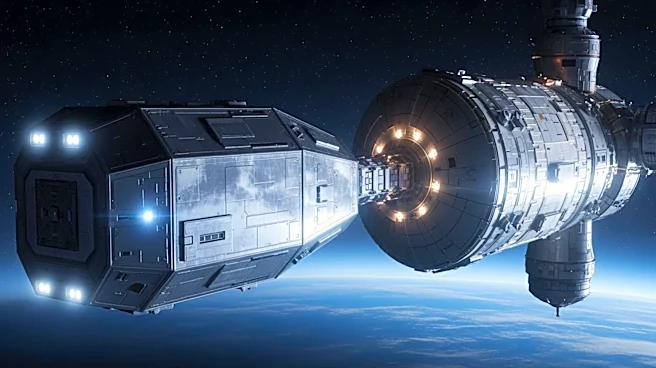
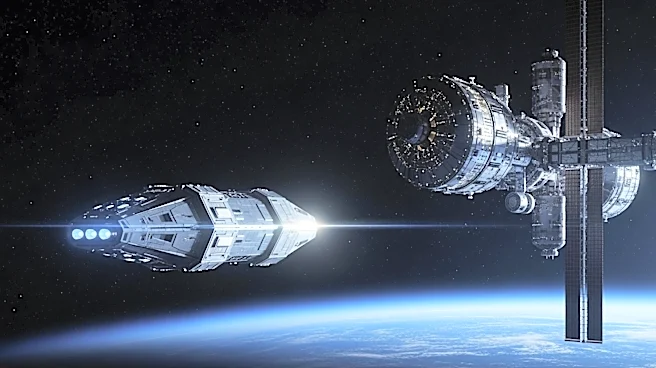
NASA has announced the finalized crew for its upcoming Crew-13 mission to the International Space Station (ISS), with a revised launch schedule set for mid-September, earlier than the initially planned November window. The crew will travel aboard a SpaceX
Dragon spacecraft. The team includes NASA astronauts Jessica Watkins, who will serve as commander, and Luke Delaney as pilot. They will be joined by Canadian Space Agency astronaut Joshua Kutryk and Roscosmos cosmonaut Sergey Teteryatnikov, both serving as mission specialists. This mission marks the 13th crewed rotation flight under NASA's Commercial Crew Program and is part of NASA's strategy to maintain a consistent presence on the ISS. Watkins will become the first NASA astronaut to fly twice aboard a SpaceX Dragon, while the other crew members will be making their first trips to orbit.
Why It's Important?
The advancement of the Crew-13 launch schedule underscores NASA's commitment to maintaining a robust and continuous human presence on the ISS. This mission is significant as it highlights the ongoing collaboration between international space agencies, including NASA, the Canadian Space Agency, and Roscosmos. The mission will support a range of scientific research and technology demonstrations, which are crucial for future space exploration missions beyond low Earth orbit. The inclusion of diverse backgrounds among the crew members, such as military aviation and engineering, enhances the mission's capability to conduct complex scientific tasks. This development also reinforces the strategic partnership between NASA and SpaceX, showcasing the effectiveness of the Commercial Crew Program in facilitating human spaceflight.
What's Next?
Following the Crew-13 mission, NASA will continue to focus on its long-term goals of lunar exploration and eventual human missions to Mars. The success of this mission could influence future crew rotations and the scheduling of subsequent missions. The collaboration with international partners is expected to continue, potentially leading to more joint missions and shared scientific objectives. The advancements in technology and research conducted during this mission will likely contribute to the development of systems and protocols for future deep space missions.