






What's Happening?
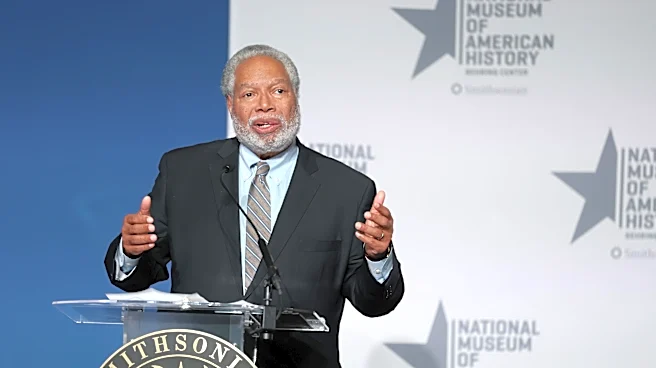
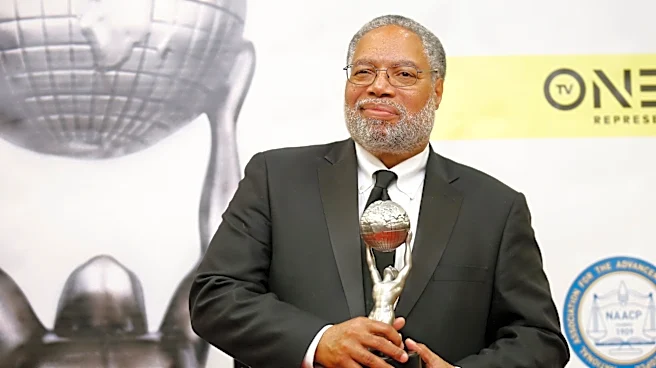
Lonnie G. Bunch, the head of the Smithsonian Institution, announced his resignation, effective at the end of the year. Bunch has served the organization for nearly four decades, starting as a curator and becoming its top leader in 2019. He made history
as the first African American and the first historian to hold the position. His departure follows over a year of criticism from President Trump regarding the Smithsonian's direction. In August 2025, President Trump called for an internal review of eight Smithsonian museums, instructing them to 'celebrate American exceptionalism.' More recently, in July 2026, the Trump administration accused the Smithsonian's National Museum of American History of 'extreme political activism.' Bunch has publicly denied that his resignation was influenced by pressure from the Trump administration. He stated that a key goal during his tenure was to encourage Americans to embrace the complexities and multifaceted nature of the nation.
Why It's Important?
Bunch's resignation marks a significant moment for the Smithsonian Institution, an organization central to American cultural and historical preservation. His departure amidst ongoing political scrutiny highlights the increasing tension between cultural institutions and political administrations regarding the interpretation and presentation of American history. The Trump administration's calls for museums to 'celebrate American exceptionalism' and accusations of 'extreme political activism' reflect a broader ideological debate about national identity and historical narratives. This situation could influence future leadership appointments at the Smithsonian and potentially other federally funded cultural organizations, setting a precedent for how such institutions navigate political pressures. The debate also underscores the challenges faced by leaders of cultural institutions in maintaining academic independence while operating under government oversight.
What's Next?
The Smithsonian Institution will now begin the process of selecting a new leader to replace Lonnie G. Bunch. This appointment will likely be closely watched, given the recent political climate surrounding the institution. The new head will face the challenge of navigating potential ongoing political pressures while upholding the Smithsonian's mission of education and research. The Trump administration may continue to exert influence over the direction of the Smithsonian's museums, potentially impacting exhibits and programming. Stakeholders, including historians, cultural advocates, and the public, will be keen to see if the institution maintains its commitment to presenting a comprehensive and nuanced view of American history or if it shifts towards a more politically aligned narrative. The search for Bunch's successor will be a critical indicator of the future trajectory of this prominent national institution.
Beyond the Headlines
The resignation of Lonnie G. Bunch extends beyond a simple leadership change; it touches upon fundamental questions about the role of national cultural institutions in a politically polarized society. The Trump administration's criticisms raise concerns about academic freedom and the potential for political interference in historical interpretation. This situation could lead to a broader re-evaluation of the relationship between government and cultural organizations, potentially influencing funding, governance, and curatorial independence. The debate over 'American exceptionalism' versus a more complex historical narrative reflects deeper societal divisions about national identity and how history should be taught and remembered. Bunch's legacy, particularly his work in establishing the National Museum of African American History and Culture, emphasizes the importance of diverse perspectives in national storytelling, a principle that may now face increased scrutiny or pressure.