



What's Happening?
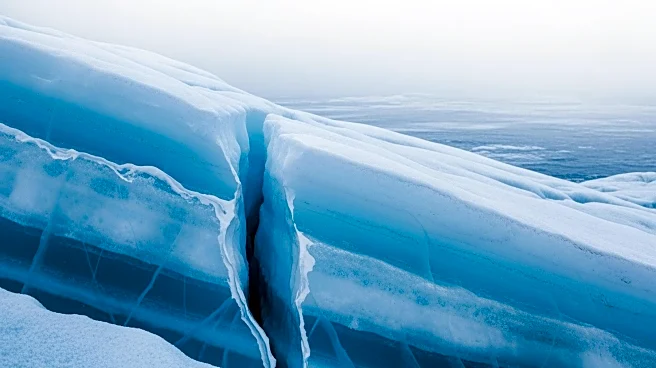
The Thwaites Glacier in Antarctica, known as the 'Doomsday Glacier,' is showing signs of structural instability that could lead to significant sea level rise. A study by the International Thwaites Glacier Collaboration reveals that cracks in the glacier's
ice shelf have been increasing, weakening its connection to the ocean floor and accelerating ice flow. The research, conducted over two decades, highlights a feedback loop where cracks lead to faster ice movement, which in turn creates more cracks. This process threatens the glacier's stability and could have global implications for sea level rise.
Why It's Important?
The potential collapse of the Thwaites Glacier poses a significant threat to global sea levels, with the capacity to raise them by several meters. This would have profound impacts on coastal communities worldwide, leading to displacement, economic loss, and environmental changes. The study underscores the urgent need for climate action to mitigate the effects of global warming, which is accelerating the glacier's destabilization. Understanding the glacier's behavior is crucial for predicting future sea level changes and preparing for their consequences.
What's Next?
Continued monitoring and research are essential to track the glacier's changes and refine predictions about its impact on sea levels. The study's findings will inform global climate policy and adaptation strategies, emphasizing the need for international cooperation in addressing climate change. As the glacier's instability progresses, scientists and policymakers must work together to develop solutions that protect vulnerable populations and ecosystems from the impending effects of rising sea levels.