


What's Happening?
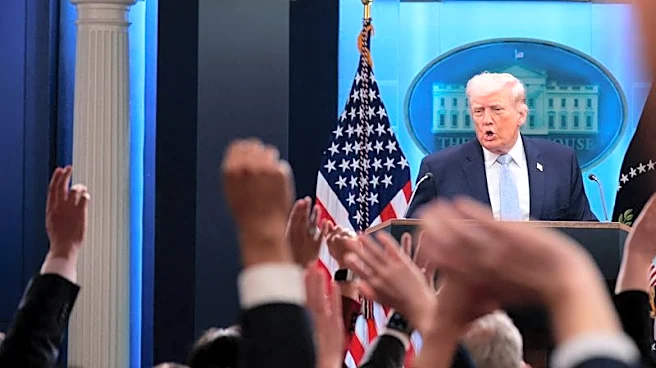
A federal judge has ruled that the Pentagon is violating a court order to restore access for reporters. U.S. District Judge Paul Friedman sided with The New York Times, stating that the Pentagon's new credential policy infringes on journalists' constitutional
rights to free speech and due process. The Pentagon had implemented new rules requiring reporters to be escorted within the building, which Friedman deemed as an attempt to evade his previous ruling. The judge ordered the reinstatement of press credentials for seven Times reporters, emphasizing that the decision applies to all regulated parties. The dispute began in October when reporters walked out of the Pentagon due to the new rules, leading to a lawsuit by the Times in December.
Why It's Important?
The ruling underscores the importance of press freedom and access to government operations, particularly in the context of U.S. military activities. The Pentagon's policy has been criticized for potentially suppressing political speech and limiting public access to information. This decision highlights the ongoing tension between national security measures and the rights of journalists to report freely. The outcome of this case could set a precedent for how government agencies manage press access, impacting the ability of media outlets to cover significant military and political developments.
What's Next?
The Pentagon has indicated plans to appeal Judge Friedman's decision, suggesting that the legal battle over press access may continue. The Pentagon Press Association, which includes reporters from various outlets, has expressed concerns over the interim policy's restrictions. As the appeal process unfolds, stakeholders in the media and government will likely engage in further discussions about balancing security concerns with press freedoms. The outcome of the appeal could influence future policies on media access to government facilities.