
What's Happening?
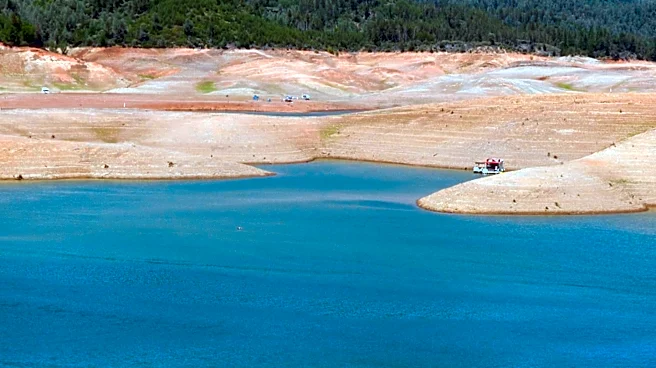
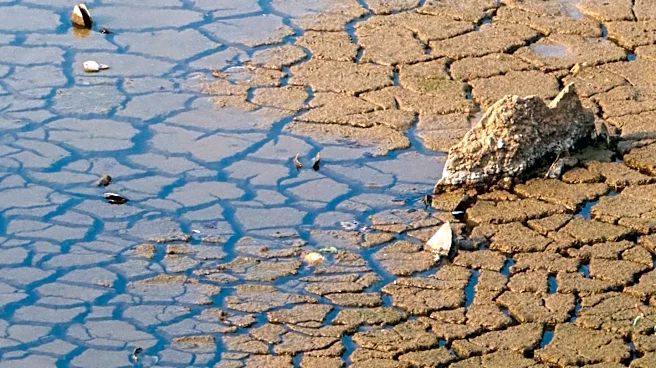
Durham, North Carolina, is facing the possibility of moving to Stage 3 water restrictions due to worsening drought conditions across the state. City officials report that Durham currently has approximately
78 days of accessible water remaining, an estimate based on no additional rainfall and no further water inflow from rivers. The city's total water supply is estimated at 147 days. Durham has been under Stage 2 water restrictions since June 15. James Lim, a Durham water official, indicated that Stage 3 restrictions would largely eliminate outdoor water use, though hand watering and drip irrigation might still be permitted. The city has a 20-inch rainfall deficit, and hopes for a major rain event, such as a hurricane, did not materialize.
Why It's Important?
The potential implementation of Stage 3 water restrictions in Durham carries significant implications for residents, businesses, and the local economy. Such severe restrictions would drastically alter daily life, impacting everything from landscaping and car washing to industrial water usage. Businesses reliant on water, such as car washes, nurseries, and certain manufacturing sectors, could face substantial operational challenges and financial losses. For residents, the restrictions would necessitate significant behavioral changes and could lead to increased utility costs if water conservation efforts are not met. The prolonged drought also poses a threat to agriculture in the region, affecting crop yields and farmer livelihoods. The situation highlights the vulnerability of urban areas to climate patterns and the critical need for robust water management strategies.
What's Next?
Durham city leaders will continue to monitor drought conditions closely. A decision on whether to implement Stage 3 water restrictions will depend on future rainfall and the rate of water consumption. If conditions do not improve, the city will likely move forward with the stricter measures, which would involve public announcements and enforcement of new regulations. In the interim, Durham is actively supplementing its water supply by purchasing approximately 9 million gallons daily from Cary, which sources its water from Jordan Lake, and 2 million gallons daily from the Orange Water and Sewer Authority. Additionally, the city is pumping about 4 million gallons daily from Teer Quarry. Residents and businesses are urged to continue practicing water conservation to mitigate the impact of the drought.
Beyond the Headlines
The escalating water crisis in Durham underscores a broader national challenge related to water scarcity and climate change. This situation could prompt long-term strategic planning for water resources, including investments in infrastructure for water recycling, desalination, or improved rainwater harvesting systems. It also raises questions about urban planning and development in drought-prone regions, potentially influencing decisions on population growth and industrial expansion. The experience in Durham may serve as a case study for other U.S. cities facing similar environmental pressures, highlighting the importance of proactive measures and public engagement in water conservation. The event could also spur innovation in water-efficient technologies and practices across various sectors.