



What's Happening?
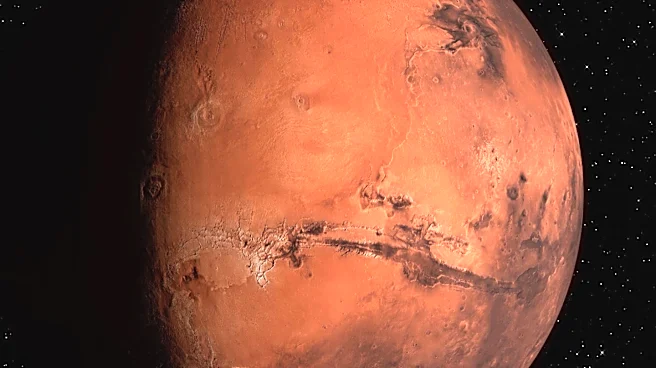
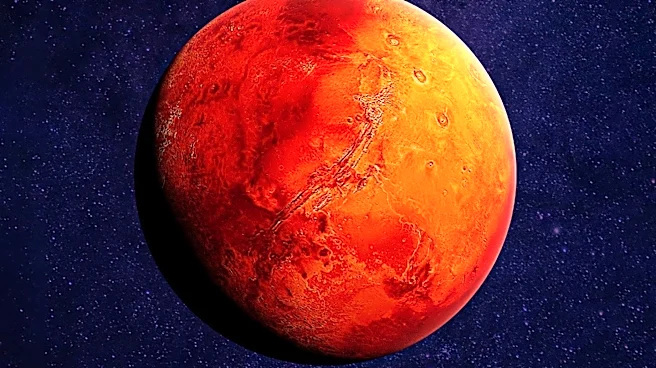
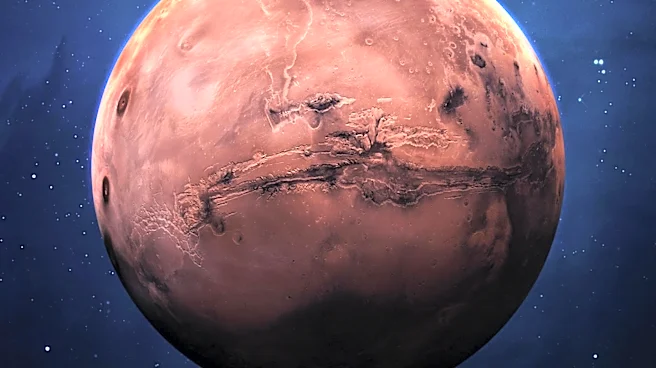
Recent studies on the Martian meteorite Teghaza 001, discovered in 2022, have provided new insights into Mars' ancient history. This meteorite, believed to be over 4.1 billion years old, offers evidence that Mars began losing its water early in its history. Researchers
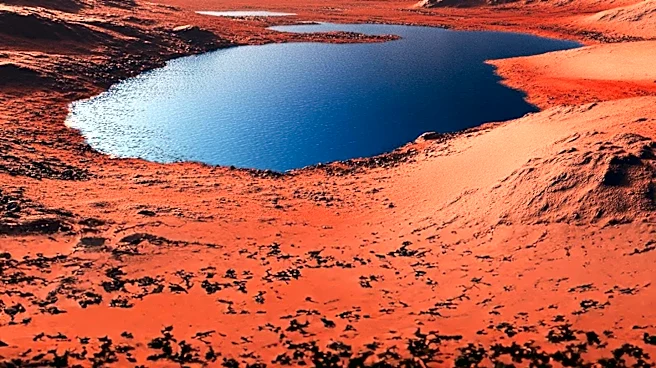
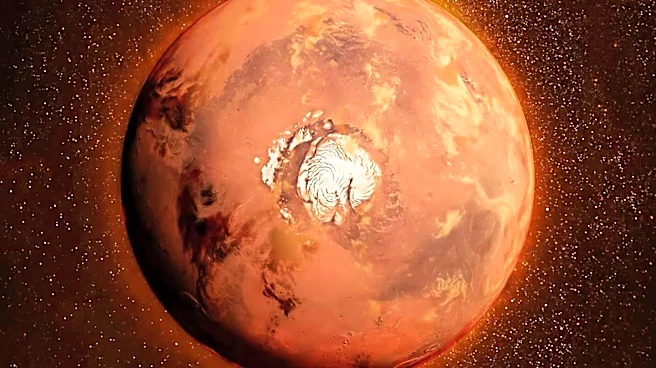
analyzed the hydrogen to deuterium ratios in the meteorite, indicating that Mars lost a significant portion of its atmosphere to space shortly after its formation. This finding suggests that Mars was rapidly losing hydrogen into space by 4.1 billion years ago. The meteorite's composition also hints at geological processes on Mars that could have been similar to Earth's plate tectonics, potentially creating conditions for habitability.
Why It's Important?
The discovery of Teghaza 001 and its analysis are crucial for understanding Mars' potential for past habitability and its geological history. The evidence of early water loss on Mars challenges previous assumptions about the planet's ability to support life. Understanding Mars' hydrological evolution can inform future exploration missions and the search for life beyond Earth. Additionally, the possibility of Mars having geological processes similar to Earth's plate tectonics expands the potential for habitable conditions on other planets, influencing the search for extraterrestrial life.
What's Next?
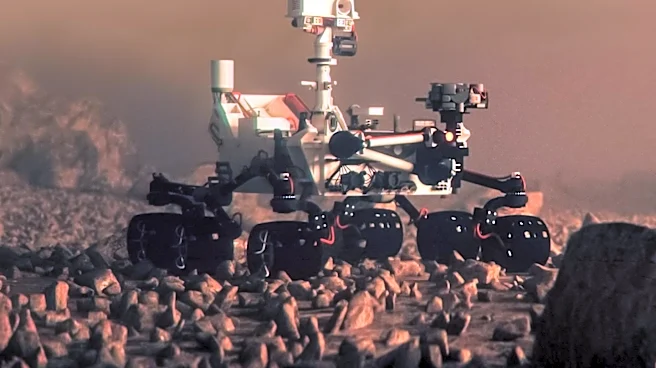
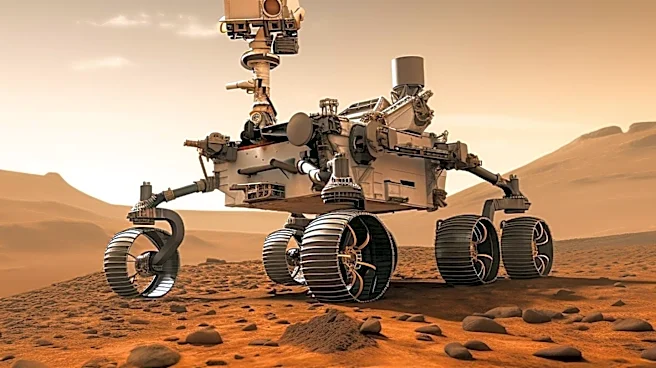
Further research is needed to confirm these findings and explore Mars' geological history in more detail. Scientists are calling for more samples to be collected from Mars to better understand its past. Future missions to Mars may focus on collecting and analyzing additional meteorites and surface samples to provide a clearer picture of the planet's history and its potential for supporting life.