








What's Happening?
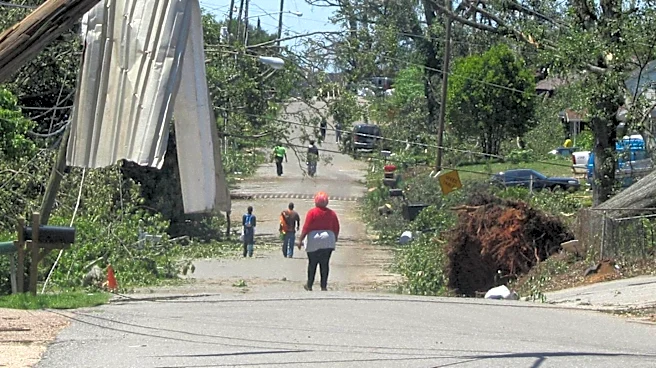
In May 2011, a devastating tornado struck Joplin, Missouri, destroying thousands of homes and displacing a significant portion of the town's population. Despite the destruction, the community became known for the kindness and cooperation that emerged
in the aftermath. Scientists studying behavior after mass traumas have noted that such disasters can lead to an outpouring of compassion and strong bonds between strangers. This phenomenon, termed 'catastrophe compassion' by Stanford social psychologist Jamil Zaki, suggests that people often come together to support one another during crises, rather than focusing solely on their own needs.
Why It's Important?
The response to the Joplin tornado illustrates the potential for human resilience and solidarity in the face of adversity. Understanding the social dynamics that lead to 'catastrophe compassion' can inform disaster response strategies and community rebuilding efforts. It highlights the importance of fostering community ties and support networks to enhance recovery and resilience. This case study can serve as a model for other communities facing similar challenges, demonstrating the power of collective action and empathy in overcoming the impacts of natural disasters.