
What's Happening?
U.N. Secretary-General António Guterres has recommended former Iraqi President Barham Salih to lead the U.N. refugee agency, marking the first nomination from the Middle East in over 50 years. Salih is
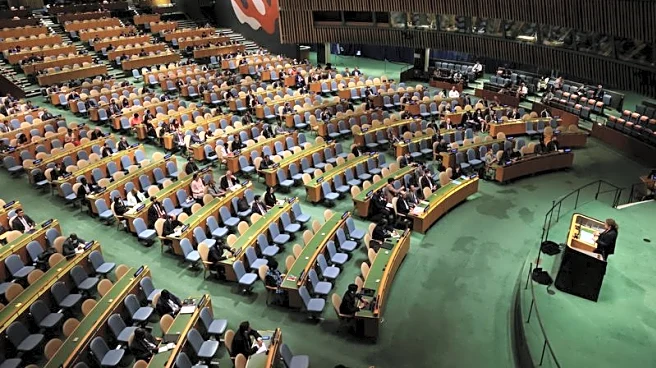
set to succeed Filippo Grandi as the U.N. High Commissioner for Refugees, whose term ends on December 31. This recommendation comes amid significant challenges for the agency, which has faced job cuts and reduced spending due to decreased foreign aid from the U.S. and other Western nations. Salih, who served as Iraq's president from 2018 to 2022, would be the first non-Western head of the agency since 1977. The appointment process involves consultations with the UNHCR's executive committee and a final decision by the U.N. General Assembly.
Why It's Important?
The appointment of Barham Salih as head of the U.N. refugee agency could signal a shift in the agency's leadership dynamics, potentially bringing a new perspective from the Middle East. This change comes at a critical time when the agency is grappling with financial constraints and a global refugee crisis. Salih's leadership could influence the agency's strategies in addressing displacement issues, particularly in regions like the Middle East, which have been significantly affected by conflicts. The U.S., traditionally a major donor, has reduced its contributions, impacting the agency's operations. Salih's experience in dealing with displacement in Iraq could be pivotal in navigating these challenges.
What's Next?
The appointment process for Barham Salih involves consultations with the UNHCR's executive committee and a final decision by the U.N. General Assembly. If confirmed, Salih will need to address the agency's financial challenges and strategize on managing global refugee crises. His leadership could also impact the agency's relationships with donor countries and its approach to refugee assistance. Observers will be watching how Salih's Middle Eastern background influences the agency's policies and operations.