



What's Happening?
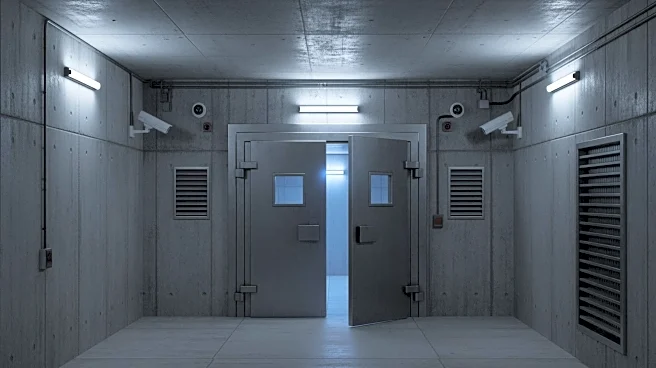
President Donald Trump is reportedly constructing a secret bunker beneath the White House to withstand nuclear attacks. This development follows the dismantling of the decades-old Presidential Emergency Operations Center (PEOC) as part of a controversial
demolition linked to Trump's new ballroom project. The new facility is intended to incorporate modern technology to address emerging threats, including nuclear, chemical, biological, and electromagnetic dangers. The project has been described as highly classified, with the White House citing national security concerns as justification for proceeding without typical approvals. The construction is part of a broader effort to enhance the White House's mission-critical functionality and security.
Why It's Important?
The construction of a new bunker under the White House underscores the ongoing need for secure command-and-control facilities capable of withstanding catastrophic events. This initiative reflects the administration's focus on national security and continuity-of-government planning. The project is significant as it involves substantial taxpayer funding, although exact costs remain undisclosed due to security classifications. The development also highlights the evolving nature of threats faced by the U.S., necessitating advanced infrastructure to protect national leadership. The secrecy surrounding the project raises questions about transparency and public oversight in government spending on security measures.
What's Next?
The plans and specifications for the new underground facility are expected to remain classified, making it challenging to ascertain the full scope and cost of the project. The White House has defended the construction in court, arguing that halting the project would endanger national security. As the project progresses, it is likely to attract scrutiny from lawmakers and the public, particularly regarding its funding and the balance between security needs and transparency. The completion of the bunker will likely be a key component of the White House's long-term security strategy.