



What's Happening?
Michigan Governor Gretchen Whitmer announced she will not run for president in the 2028 election, as stated during the Mackinac Policy Conference. Whitmer, who has been a prominent figure in Democratic politics due to her electoral successes in Michigan,
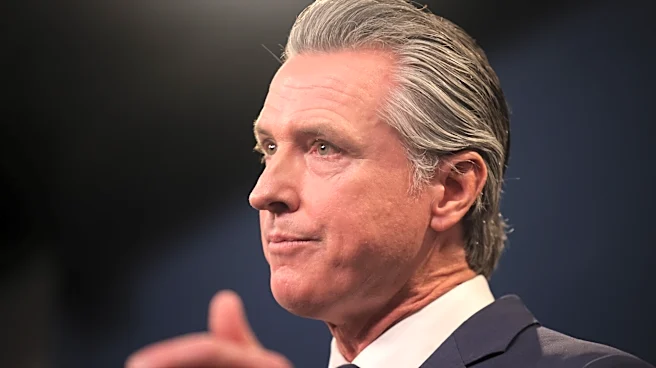
was considered a potential strong candidate for the Democratic primary. Her decision not to enter the race comes as the Democratic field is expected to be crowded, with several other prominent figures like Kamala Harris, Alexandria Ocasio-Cortez, and Gavin Newsom leading early polls. Despite her popularity, Whitmer has struggled to gain significant traction in early polling, which could influence her decision. Her announcement may impact the dynamics of the Democratic primary, as other candidates may now have a clearer path to securing support from key Democratic constituencies.
Why It's Important?
Whitmer's decision not to run in 2028 is significant as it reshapes the potential Democratic primary landscape. As a governor from a key battleground state, her candidacy could have brought substantial regional support and experience in winning tough elections. Her absence may benefit other candidates who are vying for the same voter base, particularly those from the Midwest or with similar political profiles. Additionally, Whitmer's decision highlights the strategic calculations potential candidates must make regarding their viability and the challenges of mounting a national campaign. This development could influence donor strategies and voter alignments as the Democratic field begins to solidify.
What's Next?
With Whitmer out of the race, attention will likely shift to other potential candidates who have yet to declare their intentions. Figures like Kamala Harris and Gavin Newsom, who are already leading in early polls, may now have more room to consolidate support. The Democratic primary is expected to be competitive, with candidates needing to differentiate themselves on policy and electability. As the primary field takes shape, candidates will focus on building their campaign infrastructure, securing endorsements, and appealing to key voter demographics. The decision by Whitmer may also prompt other potential candidates to announce their plans sooner, as they assess the evolving political landscape.