





What's Happening?
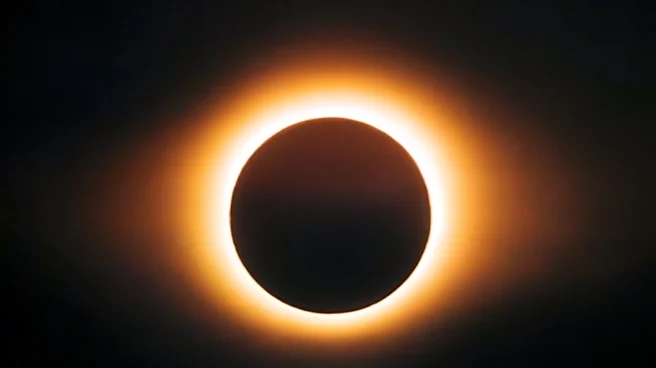
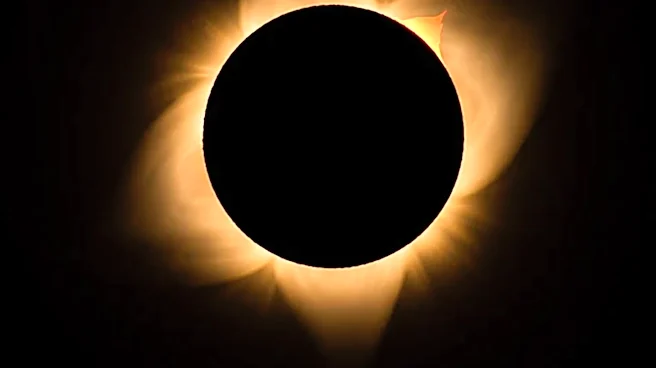
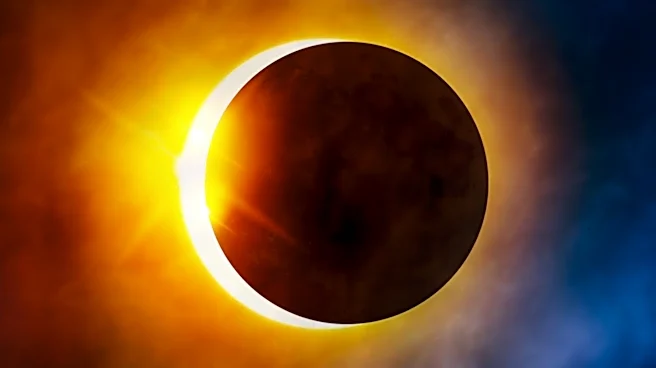
On August 12, 2026, a partial solar eclipse will be visible across parts of North America, with the best views in the northeastern United States and eastern Canada. The eclipse will occur between 7:34 a.m. AKDT and 2:52 p.m. EDT, with varying degrees
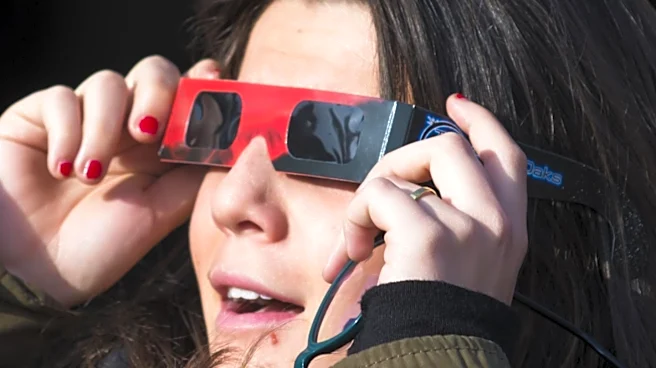
of visibility depending on location. In the U.S., Fairbanks, Alaska, will see a 37% eclipse, while Presque Isle, Maine, will experience a 28% eclipse. The event will not be as dramatic as the total solar eclipse of 2024, but it will still offer a significant celestial display. Observers are advised to use proper solar viewing glasses to safely watch the eclipse.
Why It's Important?
This partial solar eclipse provides an opportunity for educational outreach and public engagement in astronomy. It serves as a reminder of the natural phenomena that can be observed from Earth and encourages interest in science and space exploration. The event also highlights the importance of public safety in observing solar events, as looking directly at the sun without proper protection can cause serious eye damage. Additionally, the eclipse coincides with the peak of the Perseid meteor shower, offering a unique opportunity for stargazers.
What's Next?
Following this partial eclipse, the next significant solar event visible from the U.S. will be on August 2, 2027, when a partial eclipse will be visible in Newfoundland, Canada. In the meantime, astronomers and enthusiasts will continue to prepare for future celestial events, including the annular solar eclipse on January 26, 2028, and a large partial eclipse on January 14, 2029, which will be visible across North America.