







What's Happening?
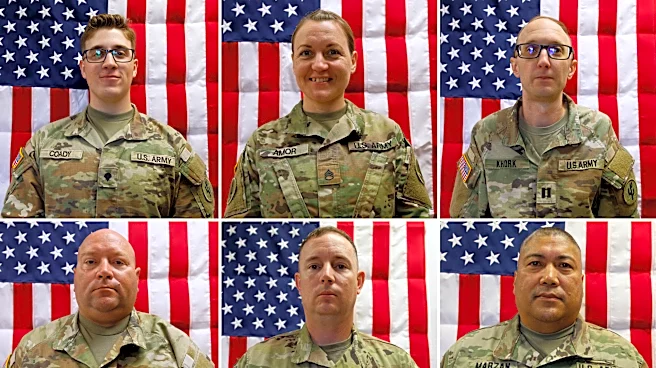
Rep. Sarah Elfreth (D-3rd) is pushing for an amendment to the annual defense policy bill that would mandate the Department of Defense to collect data on suicides within its civilian workforce. This initiative comes after a series of five suicides over
five weeks in June and July at Fort Meade, involving individuals supporting U.S. Cyber Command and the National Security Agency. Currently, the Pentagon is required to track suicide data for uniformed service members and their families but not for its civilian employees. Elfreth, a freshman lawmaker on the House Armed Services Committee, emphasizes the need for comprehensive mental health support for all personnel at Fort Meade, including service members, civilians, and contractors. She also seeks to clarify the Pentagon's definition of a suicide cluster and require the military to report all troop and civilian suicide deaths occurring within specific timeframes. The Banner Montgomery initially reported on these deaths and Elfreth's proposal. Additionally, Elfreth is collaborating with state Senator Dawn Gile (D-Anne Arundel) and Ed Rothstein, head of Maryland's Department of Veterans and Military Families, to streamline the licensing process for mental health professionals to practice in Maryland and on military bases.
Why It's Important?
This legislative effort is crucial for addressing a significant gap in mental health oversight within the Department of Defense, particularly concerning its civilian workforce. The current lack of mandated data collection for civilian suicides means that potential patterns, risk factors, and the effectiveness of mental health interventions for a substantial portion of the defense community remain unexamined. Fort Meade alone employs approximately 35,000 civilians, many of whom are engaged in high-stress, mentally demanding cyber warfare missions. The absence of a formal mechanism to identify and respond to civilian suicide clusters, unlike for uniformed personnel, leaves a vulnerable population without critical support systems. Implementing Elfreth's proposal could lead to a more holistic understanding of mental health challenges across the entire defense enterprise, enabling targeted interventions and resource allocation. This could significantly improve the well-being of thousands of individuals contributing to national security, potentially preventing future tragedies and fostering a more supportive work environment within critical defense installations.
What's Next?
The inclusion of Rep. Elfreth's proposals in the draft National Defense Authorization Act (NDAA) will be determined by House and Senate leadership as they negotiate the final bill, which is expected to come to a vote this winter after the midterm elections. If adopted, the Pentagon would be legally required to expand its suicide data collection to include civilian employees and report on civilian suicide clusters. This would likely trigger the development of new protocols and resources for civilian mental health support, mirroring those already in place for uniformed personnel. Furthermore, Elfreth's ongoing work with state officials to expedite mental health professional licensing in Maryland and on military bases could increase the availability of mental health services for both military and civilian populations. The full funding of last year's defense policy legislation, which mandated the hiring of mental health providers with security clearances at cyber installations, is also a priority, ensuring that existing initiatives are adequately supported to address mental health needs.
Beyond the Headlines
The push to include civilian suicide data in the defense policy bill highlights a broader societal challenge regarding mental health awareness and support in high-stress professional environments. The unique pressures faced by civilians working in sensitive national security roles, often alongside military personnel, underscore the need for equitable access to mental health resources. This initiative could set a precedent for other government agencies or even private sector entities with similar operational demands to re-evaluate their mental health support frameworks. Ethically, it reinforces the principle that an organization's responsibility for employee well-being extends beyond traditional definitions of service, encompassing all individuals contributing to its mission. The clarification of 'suicide cluster' definitions and the mandate for reporting could also lead to advancements in public health methodologies for identifying and responding to mental health crises in specific communities, potentially influencing broader public health policy and intervention strategies.