







What's Happening?
A study published in the Proceedings of the National Academy of Sciences has revealed that industrial-scale poultry farming is contributing to a significant increase in Campylobacter infections, a leading cause of food poisoning. Researchers from the University
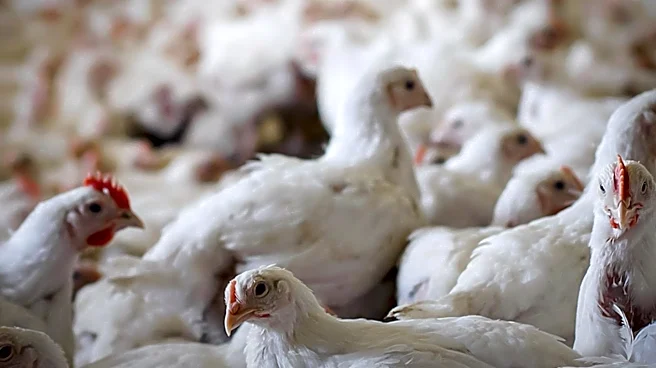
of Oxford analyzed nearly 2,800 bacterial genomes from chickens and wild birds across 30 countries, including the U.S., and found that the expansion of chicken farming has created ideal conditions for the bacterium to spread and evolve. Campylobacter, which causes more gastroenteritis cases in the UK than all other monitored foodborne bacteria combined, is becoming increasingly difficult to treat due to rising antimicrobial resistance. The study highlights the role of densely populated chicken flocks in facilitating the mixing and spread of bacterial strains, which were previously confined to wild birds.
Why It's Important?
The findings underscore the public health risks associated with industrial poultry farming, particularly the spread of zoonotic diseases and antimicrobial resistance. As chicken populations grow, the opportunity for bacteria to enter and establish themselves in poultry flocks increases, posing a threat to human health. The study suggests that understanding the evolutionary consequences of farming practices is crucial to mitigating future risks. The rise in antimicrobial resistance means that infections are harder to treat, potentially leading to more severe health outcomes. This situation calls for urgent attention to farming practices and their impact on bacterial evolution, which could help reduce the burden of foodborne diseases.