



What's Happening?
In Kenya, police have arrested Festus Omwamba, who is accused of human trafficking related to recruiting Kenyans to fight in Russia's war in Ukraine. Omwamba was apprehended in Moyale, near the Ethiopian border, and charged in Nairobi with trafficking 25
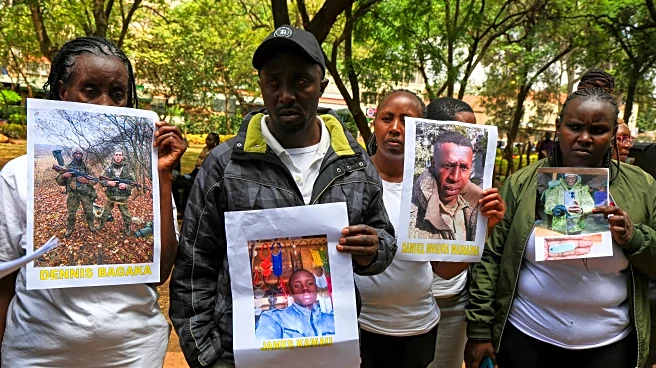
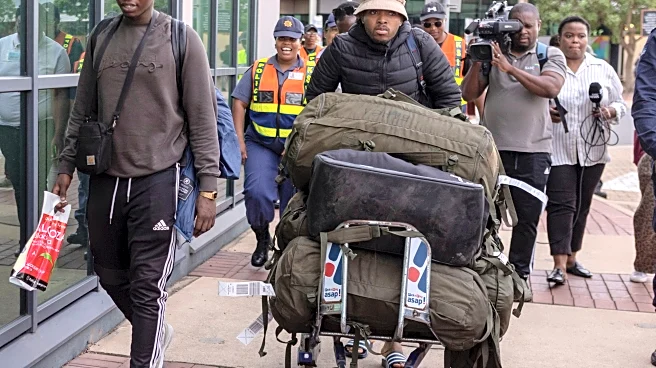
Kenyans to Russia. The arrest follows reports that over 1,000 Kenyans were recruited under false pretenses of skilled work, only to end up on the front lines in Ukraine. The Kenyan government has confirmed that 89 Kenyans remain on the front lines, with others hospitalized, missing, or deceased. An intelligence report suggests collusion between Kenyan and Russian officials with rogue recruitment agencies. The Russian Embassy in Nairobi denies issuing visas for such purposes. Kenya's Foreign Minister, Musalia Mudavadi, plans to address the issue diplomatically with Russia.
Why It's Important?
This development highlights significant international and human rights concerns, as it involves the exploitation of individuals under false pretenses for military purposes. The situation underscores the vulnerabilities in international recruitment processes and the potential for abuse. It also raises questions about the role of government officials and agencies in preventing such exploitation. The arrest of Omwamba is a critical step in addressing these issues and may lead to further investigations into the recruitment networks. The incident could strain diplomatic relations between Kenya and Russia, impacting international cooperation and policy discussions on human trafficking and military recruitment.
What's Next?
The Kenyan government is expected to continue its efforts to secure the release and repatriation of its citizens involved in the conflict. Diplomatic engagements between Kenya and Russia are anticipated, with Foreign Minister Mudavadi planning a visit to Russia to address the issue. Further investigations may reveal more about the recruitment networks and lead to additional arrests. The international community may also increase scrutiny on recruitment practices and call for stronger regulations to prevent similar incidents.