
What's Happening?
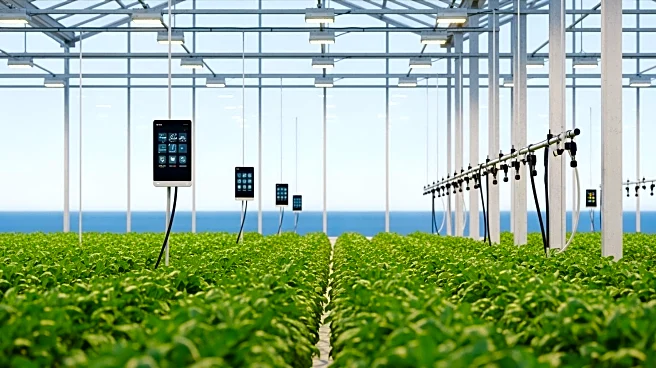
Go Global AgriTech is advancing smart farming technologies across the Pacific region to bolster food security. The company has implemented its climate-resilient farming systems in approximately 90% of
resorts in Fiji, as well as in over 30 schools and on more than 10 outer islands. These systems are also supporting 20 projects led by Non-Government Organisations, focusing on local food supply and skills training. Beyond Fiji, similar smart farming systems are operational in Australia, Papua New Guinea, Solomon Islands, Samoa, and Micronesia. The company’s technology includes solar-powered systems, advanced irrigation, coco peat media, and high-value crops, demonstrating the viability of high-tech farming in Pacific climates. The growth of these initiatives has been supported by various partners, including Investment Fiji, the Ministry of Agriculture, Tourism Fiji, the iTaukei Land Trust Board, and the European Union in the Pacific.
Why It's Important?
The expansion of smart farming technologies by Go Global AgriTech is crucial for enhancing food security in the Pacific, a region vulnerable to climate change impacts. By localizing food production and reducing dependency on imports, these systems can help stabilize food supply chains and improve resilience against environmental disruptions. The involvement of educational institutions and NGOs in these projects also promotes skills development and community empowerment, potentially leading to sustainable economic growth. The international interest and collaboration with various stakeholders underscore the potential for these technologies to be adapted and scaled across similar regions, offering a model for climate-resilient agriculture worldwide.
What's Next?
As Go Global AgriTech continues to expand its smart farming initiatives, further collaboration with international partners and local communities is expected. The company may explore additional technological innovations to enhance productivity and sustainability. Continued support from governmental and non-governmental organizations will be crucial in scaling these efforts. The success of these projects could lead to increased investment in similar technologies across the Pacific and other regions facing similar challenges, potentially influencing global agricultural practices.