






What's Happening?
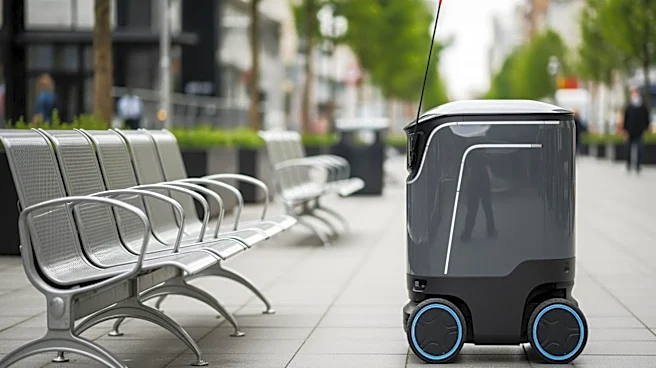
In Chicago, there is growing concern among residents about the use of food delivery robots on city sidewalks. These robots, which have been tested for their capabilities and business models, are primarily scrutinized for safety issues. Residents argue
that while technological advancements may eventually mitigate physical dangers, the core issue is the allocation of public sidewalk space. Chicago's sidewalks are traditionally reserved for pedestrians, including families, joggers, and individuals with disabilities. The introduction of delivery robots has sparked debate over whether these spaces should remain pedestrian-friendly or accommodate commercial robotic traffic. Critics highlight that existing delivery services, such as those using cars and bicycles, integrate more seamlessly into the urban environment and provide employment opportunities, unlike the robots, which primarily benefit tech companies.
Why It's Important?
The debate over delivery robots in Chicago reflects broader concerns about urban space allocation and the impact of automation on employment. Sidewalks are a vital public resource, and their use by delivery robots could disrupt pedestrian activities and accessibility, particularly for individuals with mobility challenges. Additionally, the shift towards robotic delivery services raises questions about job displacement in the gig economy, where many rely on delivery jobs for income. The situation underscores the need for city leaders to carefully consider the implications of integrating such technology into public spaces, balancing innovation with community needs and safety.
What's Next?
As the discussion continues, Chicago city leaders are encouraged to pause the delivery robot program to assess its impact thoroughly. This includes public hearings to weigh the pros and cons and establish regulations that prioritize pedestrian safety and accessibility. The outcome of these deliberations could influence how other cities approach the integration of delivery robots, potentially setting a precedent for urban planning and technology use in public spaces. Stakeholders, including residents, tech companies, and policymakers, will likely engage in ongoing dialogue to find a balanced solution.
Beyond the Headlines
The introduction of delivery robots in urban environments raises ethical and cultural questions about the role of technology in daily life. As cities become more automated, there is a risk of diminishing human interaction and community engagement. The debate also touches on the broader issue of how technology can be harnessed to improve urban living without compromising the social fabric and accessibility of public spaces. These considerations are crucial as cities navigate the challenges of modernizing infrastructure while preserving the quality of life for all residents.