
What's Happening?
A report by the Center for European Policy Analysis (CEPA), titled 'Frontline Arctic: The Evolution of Russia’s Military Posture in a Changing Arctic,' identifies Russia as the primary security threat
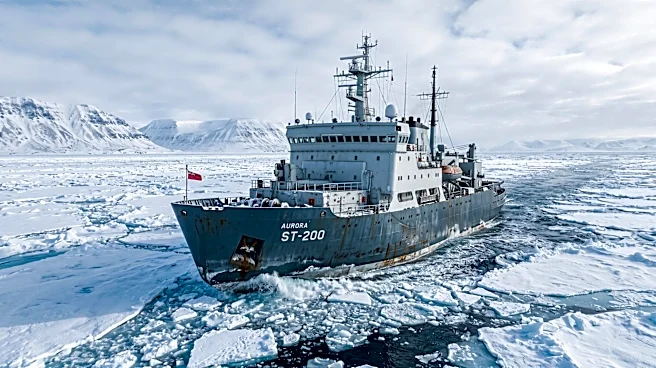
to U.S. and NATO interests in the Arctic region. The report, which Mathieu Boulègue, a Senior Fellow at CEPA and Consulting Fellow at Chatham House, contributed to, highlights Russia's preparations for conflict in the Arctic. Russia aims to impose costs on foreign militaries operating near or within its Arctic Zone (AZRF) and along the Northern Sea Route (NSR), expand its interdiction capabilities, and protect the NSR from perceived foreign encroachment. Despite over a decade of war against Ukraine, international isolation, and sanctions, Russia has adapted its military and security approach in the region. Moscow now views the Arctic as a fortress, a frontline, and a contested space, emphasizing territorial defense, near-sea control, and control over the NSR, while also perceiving increased vulnerability as other powers show interest in the region.
Why It's Important?
The CEPA report's findings are critically important for U.S. national security and NATO's strategic planning. The Arctic's receding ice is opening new maritime routes and access to resources, making it a region of increasing geopolitical competition. Russia's aggressive military posture and its intent to assert dominance in the Arctic directly challenge U.S. and NATO freedom of navigation and access. This creates an unstable and potentially contested operating environment, raising the risk of miscalculation, incidents, and tactical errors. For the U.S., maintaining a strong presence and deterrence in the Arctic is crucial to protect its economic interests, ensure the security of its northern borders, and uphold international law regarding maritime passages. The report underscores the need for continued investment in Arctic-hardened technology, improved domain awareness, and coordinated defense strategies among allies to counter Russia's growing military capabilities and assertive actions in this strategically vital region.
What's Next?
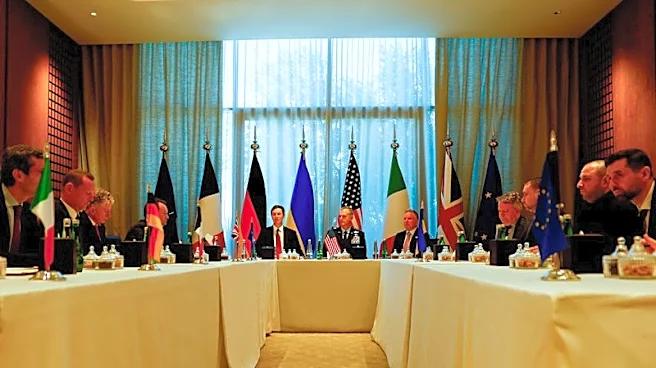
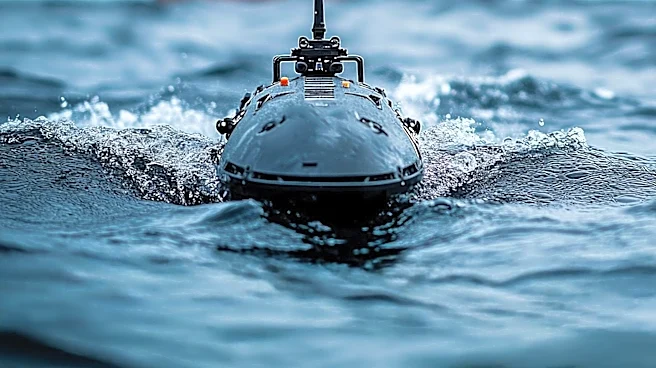
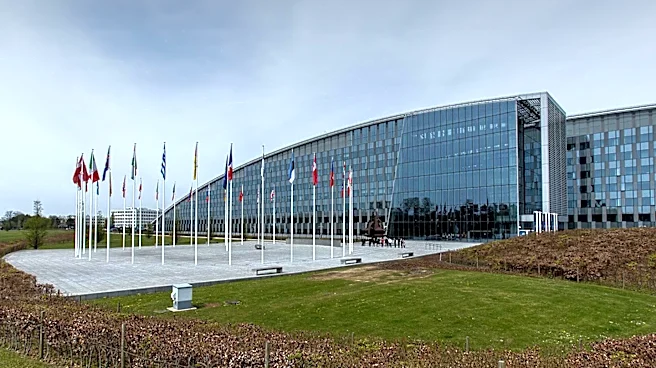
In response to Russia's evolving Arctic strategy, the U.S. and NATO allies are expected to continue strengthening their military presence and capabilities in the region. Recent developments, such as the activation of Arctic Sentry to enhance NATO's presence in the European High North and the deployment of Task Force X-Arctic to test unmanned systems, indicate a proactive approach. The U.S. Coast Guard's order for 11 Arctic Security Cutters also signifies an expansion of its icebreaker fleet, crucial for operating in the challenging Arctic environment. These efforts aim to bolster integrated deterrence through sustained presence, improved domain awareness, and advanced Arctic-hardened technology. Western policy will need to adapt to Russia's mix of retrenchment, resentment, and adaptation, recognizing that a vulnerable Russia may increasingly rely on nuclear signaling and disruptive 'grey zone' activities. Continued collective determination among the U.S. and NATO allies will be essential to ensure a safe, stable, and predictable Arctic, mitigating the risks of horizontal escalation from other theaters of operation.
Beyond the Headlines
The report's analysis of Russia's Arctic strategy reveals a deeper geopolitical struggle beyond military posturing. The Kremlin's perception of vulnerability in a region where it once held strategic dominance highlights the psychological and identity-based dimensions of its foreign policy. The demise of the Arctic Council as the primary forum for circumpolar discussions on science and governance further exacerbates volatility, as it removes a key platform for de-escalation and cooperation. This shift towards a more militarized and contested Arctic has profound implications for environmental protection, indigenous communities, and scientific research, as military activities could disrupt fragile ecosystems and traditional ways of life. The U.S. and its allies face the challenge of balancing security concerns with environmental stewardship and the rights of Arctic inhabitants. The long-term implications include a potential arms race in the Arctic, increased resource competition, and a heightened risk of environmental disasters, all of which demand a comprehensive and nuanced policy response that extends beyond traditional military deterrence.