




What's Happening?
Following his reelection, Tennessee Republican Rep. Tim Burchett has publicly stated his desire to be considered for the U.S. Senate seat that will be vacated by Sen. Marsha Blackburn. Sen. Blackburn recently won the Tennessee gubernatorial race and is set
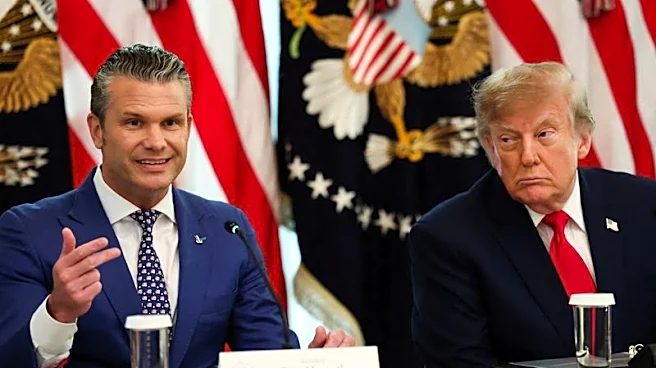
to assume the governorship in January. Her transition opens up a significant political vacancy, prompting early jockeying among potential successors. Burchett confirmed his interest to The Associated Press, indicating his readiness to pursue the position. Meanwhile, speculation had also surrounded Defense Secretary Pete Hegseth as a potential candidate for the seat. However, sources familiar with the matter have indicated that Hegseth is not currently under consideration for the appointment. Sen. Blackburn is reportedly focused on her transition to the governorship and has dismissed the speculation regarding Hegseth as unfounded.
Why It's Important?
The vacancy of a U.S. Senate seat in Tennessee holds considerable importance for both state and national politics. The individual appointed to fill this seat will represent Tennessee in the Senate, influencing federal legislation, policy debates, and the balance of power in Congress. For Rep. Tim Burchett, securing this appointment would mark a significant advancement in his political career, moving him from the House of Representatives to the Senate. The selection process will likely involve careful consideration by Sen. Blackburn, who will have the authority to appoint her successor to serve the remainder of her term, which concludes in January 2031. This decision will shape Tennessee's representation in Washington for several years and could impact future electoral dynamics within the state.
What's Next?
The immediate next step involves Sen. Marsha Blackburn's transition into the governorship, which is scheduled for January. As she prepares to take office, she will be tasked with appointing a successor to her Senate seat. This appointment will be a critical decision, as it will determine who represents Tennessee in the U.S. Senate for the remainder of her term. While Rep. Tim Burchett has publicly expressed his interest, other potential candidates may also emerge or be considered. The process will likely involve internal discussions within the Republican Party in Tennessee and consultations with key stakeholders. The chosen appointee will then need to be sworn in, officially taking their place in the Senate and beginning their tenure as a federal legislator.
Beyond the Headlines
The process of filling a vacated Senate seat through appointment, rather than a special election, often carries broader implications for political strategy and party dynamics. An appointed senator gains immediate incumbency, which can provide a significant advantage in subsequent elections. This situation allows the appointing governor, in this case, Sen. Blackburn, to shape the future political landscape of the state by selecting a candidate who aligns with her vision and political objectives. The choice could also reflect internal party unity or divisions, depending on the consensus around the chosen individual. Furthermore, the appointment could influence the ideological balance within the Senate Republican caucus, potentially shifting policy priorities or legislative approaches on key national issues.