





What's Happening?
The International Desalination and Reuse Association (IDRA) and the Asia Pacific Desalination and Reuse Association (APDRA) have signed a strategic partnership agreement. This collaboration aims to strengthen connections within the global water community
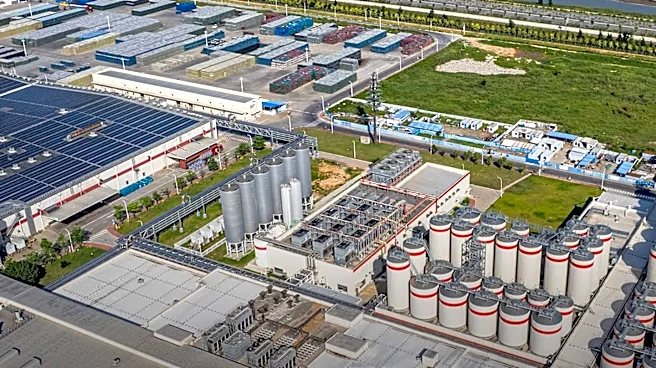
and advance water treatment infrastructure in the Asia-Pacific region. The Asia-Pacific region is currently the fastest-growing market globally for investment in desalination and water reuse. Countries such as Australia, Singapore, India, China, and the Pacific Islands are significantly increasing their advanced water treatment infrastructure. This expansion is driven by a combination of factors including rapid population growth, increasing urbanization, and heightened climate variability. The substantial investment in this sector is attracting a diverse range of stakeholders, including technology providers, utilities, financiers, and engineering firms, at an unprecedented rate compared to a decade ago. Shannon K. McCarthy, Secretary General of IDRA, emphasized that the Asia-Pacific region is crucial for the future of desalination and water reuse, and professionals in the area require stronger global connections. Young qing Lee, President of APDRA, reiterated the association's commitment to fostering knowledge exchange and collaboration worldwide to achieve water security and sustainable water solutions.
Why It's Important?
This partnership is important because it addresses critical water security challenges in a rapidly developing and climate-vulnerable region. The Asia-Pacific's accelerated investment in desalination and water reuse technologies has significant implications for global water management strategies and the U.S. water technology sector. U.S. technology providers, engineering firms, and financial institutions stand to gain from increased opportunities for collaboration, export, and investment in this burgeoning market. The region's proactive approach to water infrastructure development, driven by demographic and environmental pressures, sets a precedent for other areas facing similar issues. For the U.S., this could mean enhanced demand for American expertise and innovation in water treatment, potentially boosting economic growth and job creation in related industries. Conversely, a failure to engage effectively could lead to missed economic opportunities and a reduced influence in shaping global water sustainability practices. The collaboration also highlights the growing recognition of water as a strategic resource, influencing international relations and trade policies.
What's Next?
The strategic partnership between IDRA and APDRA is expected to facilitate business and technical collaboration, shared access to events and training, and regular coordination. This structured approach aims to deliver tangible benefits for members of both organizations, fostering sustained activity in the water sector. The continued scaling up of advanced water treatment infrastructure across the Asia-Pacific region will likely lead to further innovation and the development of new technologies. This will create ongoing opportunities for U.S. companies specializing in water purification, wastewater treatment, and related engineering services. Additionally, the increased focus on water security in the Asia-Pacific may influence international policy discussions and funding initiatives related to climate adaptation and sustainable development. Stakeholders, including governments, private sector entities, and research institutions, will likely monitor the progress of these initiatives to identify best practices and potential areas for further investment and cooperation.
Beyond the Headlines
Beyond the immediate economic and technological implications, this partnership underscores a broader global shift towards proactive environmental management and resource security. The emphasis on desalination and water reuse reflects a growing understanding that traditional water sources are becoming insufficient or unreliable due to climate change and population pressures. This development could trigger long-term shifts in how nations perceive and manage their water resources, moving towards more circular and resilient water systems. Ethically, it raises questions about equitable access to advanced water technologies and the potential for these solutions to exacerbate or alleviate water inequalities. Culturally, it may foster greater international cooperation and knowledge sharing, as countries learn from each other's experiences in implementing large-scale water projects. The long-term success of these initiatives will depend not only on technological advancements but also on effective governance, community engagement, and sustainable financing models.