
What's Happening?
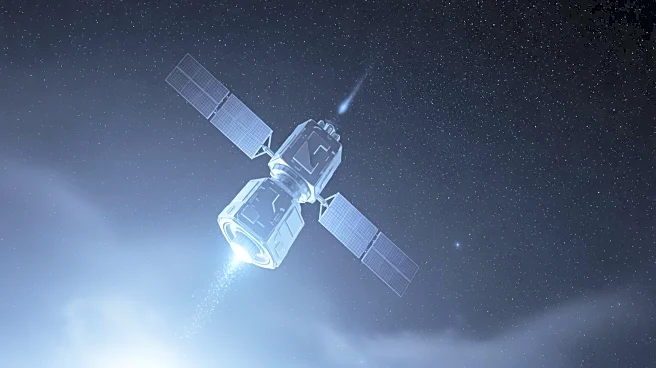
A SpaceX Starlink satellite, designated as 35956, has suffered a significant anomaly, resulting in a loss of communication and a rapid orbital decay. The incident occurred on December 17, when the satellite was
at an altitude of 418 kilometers. The anomaly led to the venting of the satellite's propulsion tank, causing it to lose altitude and release a small number of debris fragments. SpaceX is closely monitoring the situation in collaboration with NASA and the U.S. Space Force. The satellite is expected to burn up in the Earth's atmosphere within a few weeks, posing no threat to the International Space Station or its crew.
Why It's Important?
The incident highlights the challenges of managing a large constellation of satellites in low Earth orbit, where the risk of collisions and debris generation is significant. With nearly 9,300 active satellites, the Starlink network represents a substantial portion of all operational satellites. The anomaly underscores the importance of robust safety protocols and coordination among satellite operators to prevent potential collisions. SpaceX's commitment to investigating the cause and implementing software improvements is crucial for maintaining the safety and reliability of its satellite network. The event also raises broader concerns about space traffic management and the need for international cooperation in space operations.
What's Next?
SpaceX is conducting a thorough investigation to determine the cause of the anomaly and is working on software upgrades to prevent similar incidents. The company emphasizes its commitment to space safety and is likely to enhance its collision-avoidance systems. The incident may prompt discussions among international space agencies and satellite operators about improving coordination and safety standards in orbit. As the satellite continues its descent, SpaceX will provide updates on its status and any potential impacts on other space assets.