







What's Happening?
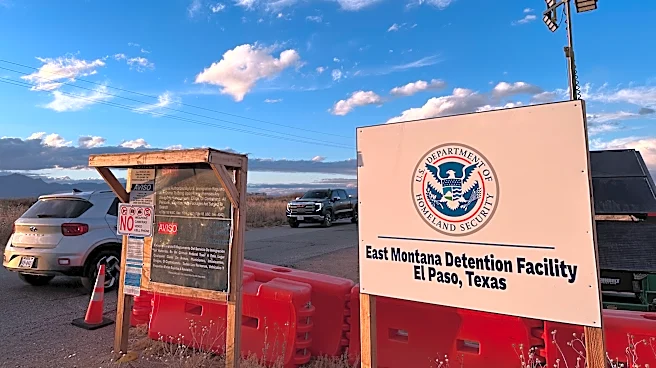
A recent report by the U.S. Government Accountability Office (GAO) has uncovered significant issues at Camp East Montana, one of the largest immigration detention centers in the United States, located in El Paso, Texas. The facility, which opened in August
2025, was initially operated by Acquisition Logistics LLC under a $1.3 billion contract. The report highlights millions of dollars wasted on meals and operations billed at full capacity despite a lower detainee population. Additionally, the report details severe violations, including inadequate medical and mental health care, excessive use of force, and the destruction or loss of evidence in a detainee death investigation. The facility has been a focal point of controversy since its inception, with immigration lawyers and rights advocates raising concerns about conditions. The Department of Homeland Security has since replaced the contractor with Amentum Services, promising improvements and increased oversight.
Why It's Important?
The findings of the GAO report underscore the broader implications of mismanagement within the U.S. immigration detention system, particularly under policies implemented during President Trump's administration. The report's revelations of wasted taxpayer dollars and endangerment of detainee health highlight systemic issues that could affect public trust in government operations and immigration policy. The situation at Camp East Montana reflects ongoing debates about the ethics and efficacy of immigration enforcement practices. Lawmakers and advocates are calling for accountability and reform, emphasizing the need for humane treatment and responsible use of public funds. The report may influence future policy decisions and legislative actions aimed at improving conditions and oversight in detention facilities.
What's Next?
In response to the report, the Department of Homeland Security has committed to upgrading the facility and enhancing oversight with the new contractor, Amentum Services. However, calls for further action persist, with Congresswoman Veronica Escobar advocating for the facility's closure and a thorough investigation into the contractor's practices. The destruction of evidence related to a detainee's death may lead to legal and criminal inquiries. As the situation develops, stakeholders, including lawmakers, immigration rights groups, and the public, will likely continue to scrutinize the facility's operations and push for comprehensive reforms in the immigration detention system.