





What's Happening?
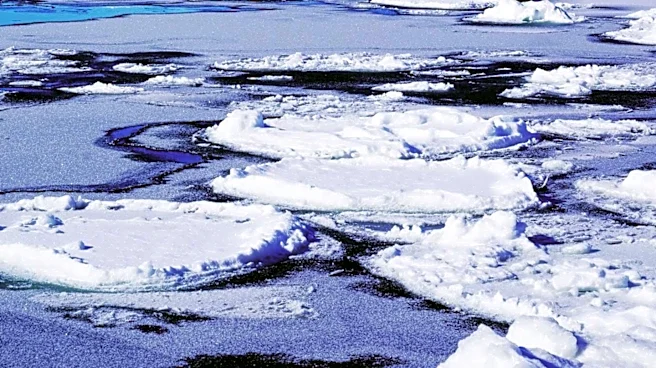
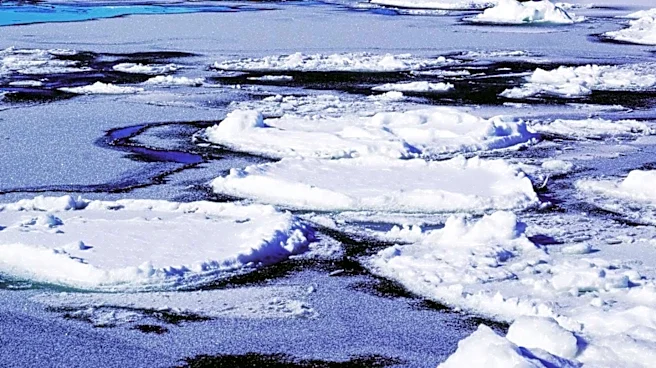
Scientists have observed a rapid and dramatic decline in Antarctic sea ice since 2016, leading to significant changes in the Southern Ocean. A recent paper documented a sharp increase in the salinity of the Antarctic Intermediate Water, a vast layer extending
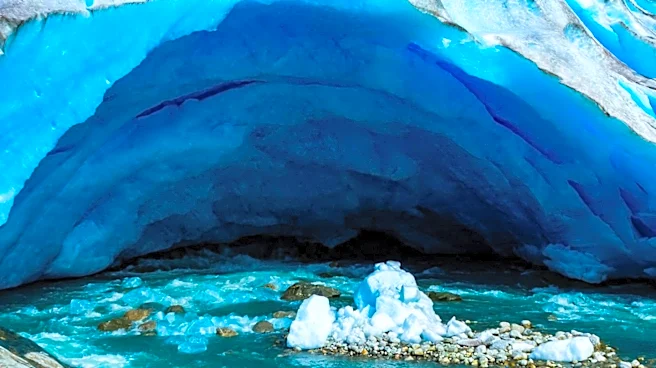
from 2,300 to 4,000 feet deep around Antarctica. This shift reverses a decades-long trend of freshening water and indicates a rapid transition in a crucial part of Earth's climate system. The sea ice reached a record low in 2023, measuring approximately 1 million square miles below the 1981 to 2010 average, an area roughly four times the size of Texas. This reduction in freshwater from melting ice is making the Antarctic Intermediate Water saltier, impacting ocean density, thickness, and circulation patterns.
Why It's Important?
The changes in Antarctic sea ice and ocean salinity have profound global implications. The Antarctic Intermediate Water plays a vital role in transporting heat, carbon, oxygen, and nutrients from the Southern Ocean northward into the Indian, Pacific, and Atlantic oceans, even crossing the equator. Alterations in its properties and circulation can affect how the ocean stores and redistributes heat, potentially leading to increased storm frequency and ocean heat loss. The Southern Ocean is also a major sink for human carbon dioxide emissions, moderating the rate of climate change. Any disruption to these key ocean cycles could have widespread effects on global climate systems and ecosystems, impacting weather patterns, marine life, and the planet's ability to absorb greenhouse gases.
What's Next?
Scientists emphasize the need for increased monitoring to track these rapid changes in the Southern Ocean. While it is not yet clear if the observed shift is permanent due to the relatively short observational record, the speed and persistence of the sea ice decline suggest a potential new state for the ocean around Antarctica. Climate models currently struggle to accurately reflect recent sea ice losses, indicating a need for further research and model refinement. If the low sea-ice state continues, these changes are expected to spread throughout the world's oceans, with effects rippling across global climate and ecosystems within years to decades. Researchers will continue to study the long-term impacts and potential feedback loops on global climate.
Beyond the Headlines
The dramatic decline in Antarctic sea ice and the subsequent ocean changes highlight the interconnectedness of Earth's climate systems and the potential for rapid, non-linear responses to global warming. This development underscores the urgency of addressing climate change, as shifts in one region can trigger cascading effects worldwide. The ethical dimension involves humanity's responsibility to mitigate its impact on the planet, especially given the potential for irreversible changes to critical natural processes. Culturally, these findings challenge existing perceptions of climate stability and emphasize the need for a global, collaborative approach to environmental stewardship. The long-term implications could include significant alterations to marine biodiversity, coastal communities, and global weather patterns, necessitating adaptive strategies and policy changes.