
What's Happening?
Rep. Don Beyer (D-Va.) has publicly challenged Eric Trump over claims regarding the financial dealings of the Trump family. Beyer accused Eric Trump of making 'outright lies' about the nature of his father's
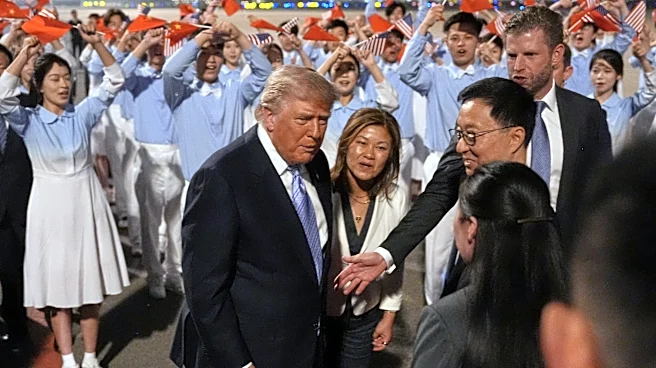
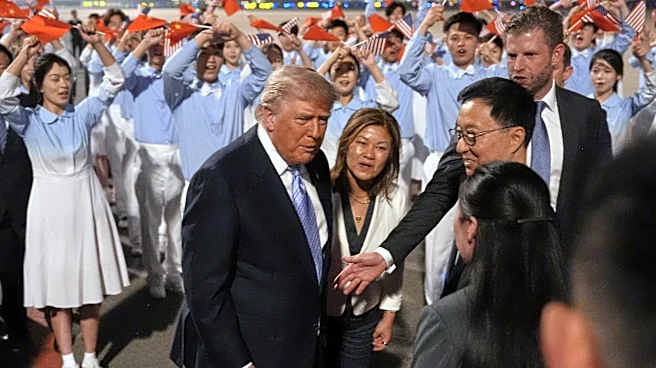
assets, which Eric Trump claimed were held in a blind trust that does not engage in individual stock transactions. Beyer provided evidence from a financial disclosure form signed by President Trump, showing that he purchased up to $1 million in Nvidia stock shortly before the company was authorized to sell advanced chips to China. This disclosure has raised concerns about potential conflicts of interest, as highlighted by Sen. Elizabeth Warren (D-Mass.), who criticized the timing of the stock purchase in relation to President Trump's trip to China with Nvidia's CEO. The document reveals extensive stock trading activity by President Trump, contradicting previous assertions of a blind trust.
Why It's Important?
The allegations against the Trump family highlight ongoing concerns about transparency and potential conflicts of interest in political leadership. The timing of President Trump's stock purchases, particularly in Nvidia, raises questions about the influence of personal financial interests on policy decisions, especially those involving national security. This situation underscores the importance of stringent ethical standards and oversight in government to prevent the misuse of power for personal gain. The controversy also reflects broader issues of trust and accountability in political figures, which can impact public confidence and the integrity of democratic institutions.
What's Next?
The revelations may prompt further scrutiny from lawmakers and ethics watchdogs, potentially leading to investigations or calls for more stringent regulations on financial disclosures and conflicts of interest for public officials. Political opponents may use this incident to question the Trump family's commitment to ethical governance, influencing public opinion and voter behavior. Additionally, there could be increased pressure on regulatory bodies to enforce stricter compliance with existing ethical guidelines to prevent similar situations in the future.