




What's Happening?
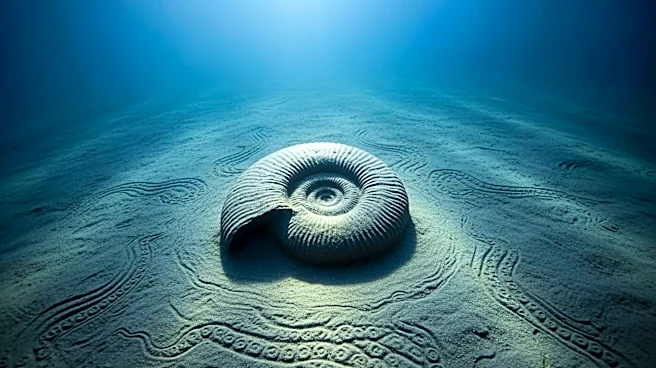
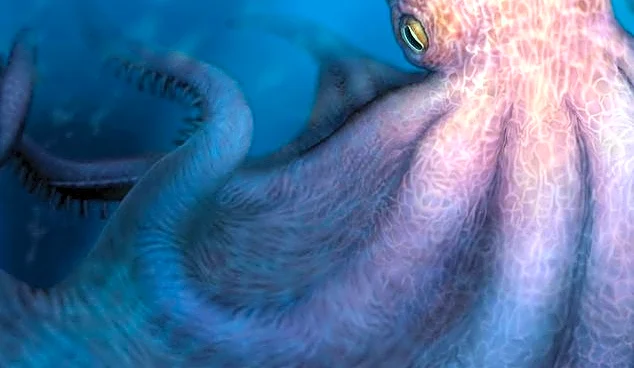
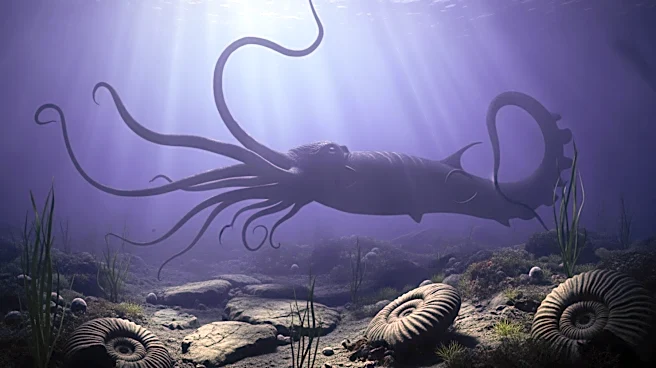
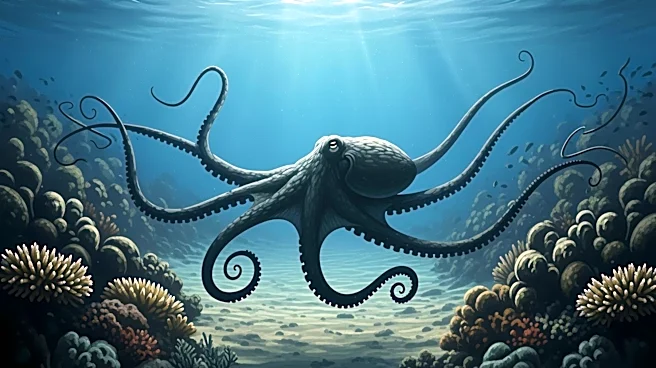
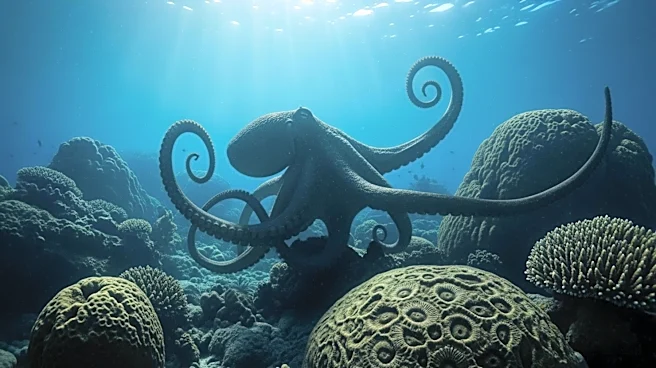
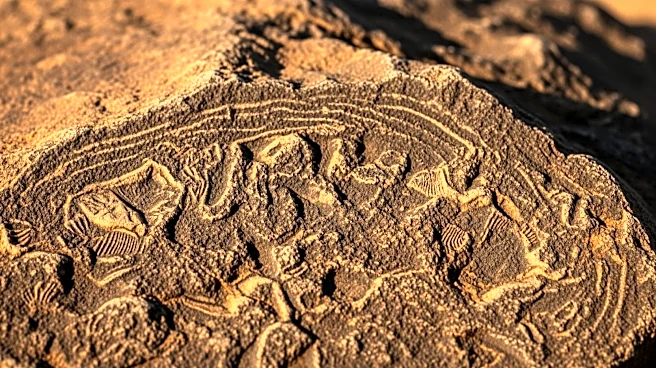
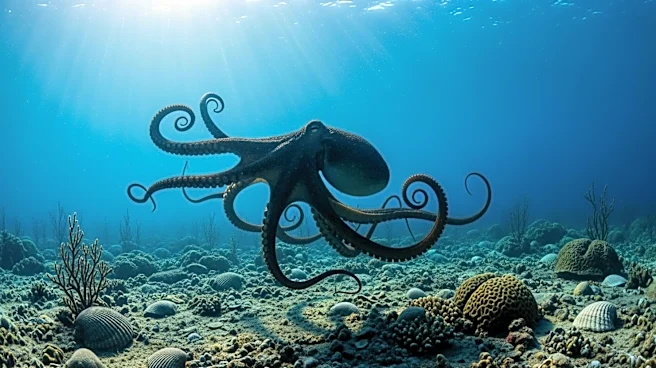
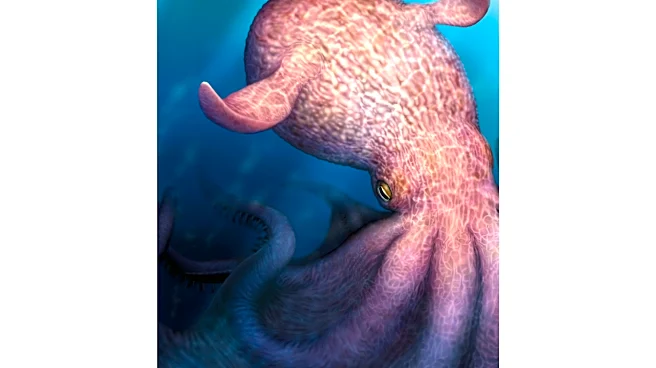
Researchers have uncovered evidence of ancient colossal octopuses that lived during the late Cretaceous period, revealing them as some of the largest invertebrates ever described. Using digital fossil-mining techniques, scientists discovered octopus jaws
encased in rocks, suggesting these creatures could reach lengths of up to 60 feet. The findings, published in the journal Science, indicate that these octopuses were formidable predators, capable of preying on hard-shelled marine animals. This discovery provides new insights into the diversity and complexity of marine life during the Cretaceous period, challenging previous assumptions about the evolution of octopuses.
Why It's Important?
The discovery of these ancient octopuses is significant as it expands our understanding of marine ecosystems during the Cretaceous period. It highlights the evolutionary adaptability of octopuses, which have long been considered unique due to their intelligence and complex behaviors. The findings also contribute to the broader field of paleontology by demonstrating the potential of new technologies to uncover previously hidden aspects of ancient life. This research not only enriches our knowledge of the past but also informs current studies on marine biodiversity and the evolutionary history of cephalopods.
Beyond the Headlines
The revelation of colossal octopuses from the Cretaceous period prompts further exploration into the ecological roles these creatures played in their environments. Their existence suggests a more dynamic and competitive marine ecosystem than previously understood, with implications for how we view predator-prey relationships in ancient seas. Additionally, the study underscores the importance of interdisciplinary approaches in paleontology, combining traditional fossil analysis with advanced digital techniques. This integration of methods may pave the way for future discoveries, offering a more comprehensive picture of life on Earth millions of years ago.