
What's Happening?
Environmental agencies are advocating for households to repurpose pruning scraps, such as twigs, leaves, and small branches, into mulch rather than disposing of them as waste. The average household generates
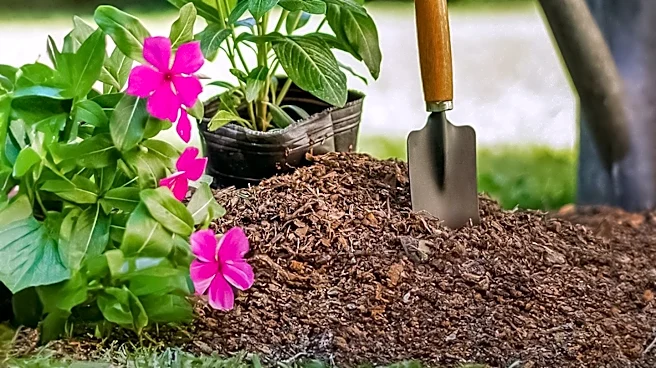
approximately 81 kilograms of green waste annually, which is often transported to dumps and then repurchased as mulch or compost from garden centers. Experts highlight that these pruning scraps are fundamentally the same product sold in bags, but without the associated packaging, transportation, and cost. The recommendation is to shred these materials immediately after pruning while they are still pliable, transforming disposal into production. This practice not only eliminates the need for dump runs and garden center trips but also provides a local resource that enriches soil, retains moisture, and suppresses weeds.
Why It's Important?
This initiative holds significant importance for both environmental sustainability and household economics in the U.S. By encouraging the at-home conversion of green waste into mulch, it directly addresses the substantial volume of organic material entering landfills, aligning with the 2020 waste management law's emphasis on local composting. This shift reduces the carbon footprint associated with waste transportation and the production of commercial mulch. Economically, households can save money by avoiding the purchase of store-bought mulch and the costs associated with waste disposal. Furthermore, the practice promotes healthier gardening by providing nutrient-rich, chemical-free mulch, contributing to more sustainable landscaping practices across communities. It also educates the public on resourcefulness and the value of organic materials.
What's Next?
The continued promotion of at-home composting and shredding programs is expected, potentially through local municipal initiatives offering chipping events or free chipper rentals. Environmental agencies will likely continue to issue guidelines, such as avoiding diseased plants for mulching and applying fresh material in thin layers to prevent 'nitrogen hunger.' The focus will remain on educating homeowners about the benefits and proper techniques for repurposing green waste. This could lead to a gradual reduction in household green waste sent to landfills and an increase in the adoption of sustainable gardening practices. The long-term goal is to embed this practice as a standard component of household waste management, reducing environmental impact and fostering self-sufficiency in gardening.
Beyond the Headlines
Beyond the immediate benefits of waste reduction and cost savings, this movement towards repurposing pruning scraps signifies a broader cultural shift in how society views 'waste.' It challenges the conventional linear model of consumption and disposal, promoting a circular economy at the household level. This approach fosters a deeper connection between individuals and their local ecosystems, encouraging a more mindful and responsible interaction with natural resources. The ethical dimension lies in recognizing the inherent value in materials often discarded, transforming them from liabilities into assets. This shift could inspire similar innovations in other areas of household waste, leading to a more holistic and sustainable approach to resource management and environmental stewardship.